A rectangle body shape is often described as shoulders, waist, and hips with a relatively straight visual line. That description can be useful when choosing clothes, but it does not mean you need to manufacture curves every morning. Some days a clean column feels modern and easy; on others, a belt, a peplum, or a cropped jacket gives the outfit more movement. The useful style guide is the one that helps you choose deliberately, not the one that makes one silhouette sound like a correction.
Recognise proportion without turning it into a rulebook
People often notice a rectangle proportion because their shoulders and hips appear similar in width and the waist is less sharply defined in some clothes. The same person may look more defined in a fitted dress, softer in knitwear, and almost hourglass-shaped in a high-waist skirt. Fabric, posture, and garment construction all change the outline. A body shape label is best treated as a starting point for fit experiments, not a permanent identity.
Start with the areas that decide whether clothes feel good: shoulder seam, bust room, torso length, and hip ease. A jacket with the correct shoulder can give a straight torso a crisp frame even when it has no waist suppression. A dress with a waist seam can feel awkward if that seam lands too high or too low. When something seems “wrong,” name the practical issue before blaming your body. Usually the garment is asking for a different length, a softer fabric, or a less aggressive cut.
Rectangle body shape outfits do not need a narrow belt in every look. Repeating the same trick can make clothes feel costume-like, especially if the belt presses at a point that is not comfortable. A partial tuck, a shorter layer, a contrast in texture, or trousers with a shaped waistband can suggest a waist without drawing a hard line around it.
Choose between definition and a clean column
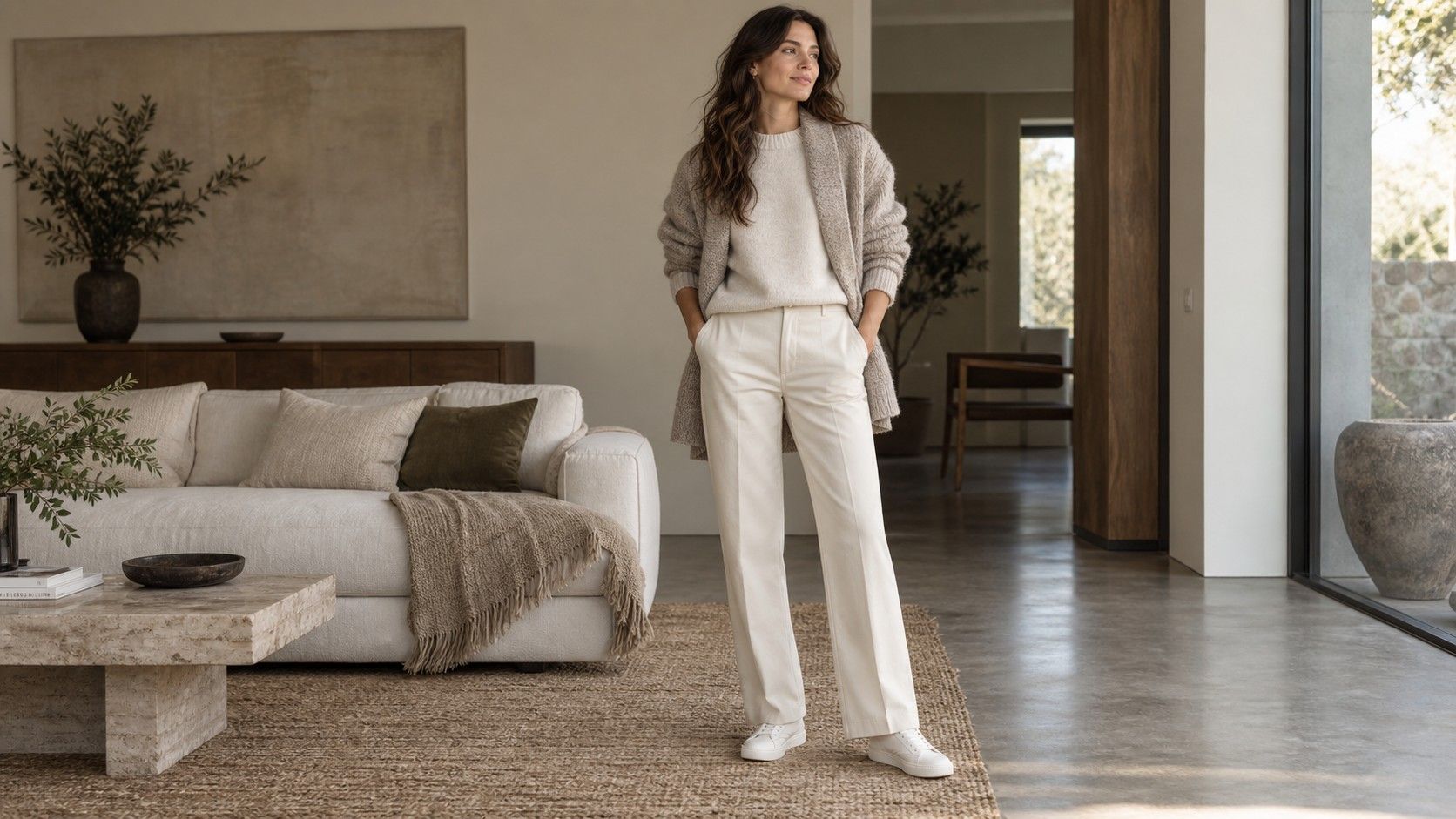
A clean column is one of the simplest and strongest ways to dress a straight torso. It might be a fitted-but-not-tight knit with straight trousers in a similar colour, a long dress with boots, or a T-shirt under an unstructured blazer. The eye moves vertically, and the outfit looks intentional because the pieces share a mood. This is especially useful on rushed days, when too many separate accents can make an outfit feel overworked.
When you want more definition, put volume or contrast where it serves the outfit. A waist seam, a tie that sits loosely, a cropped jacket, or a peplum can create a change in direction at the torso. The important thing is volume placement. A peplum that starts at the true waist may feel playful and balanced; one that begins on the ribcage can look like it is fighting the body underneath. Try it while sitting as well as standing, because a stiff peplum can tip up in a way a mirror does not predict.
There is also a middle option: an outfit that suggests shape through layers rather than a cinched waist. Wear a slim top under an open overshirt, or a simple dress under a jacket that ends around the upper hip. The open layer creates vertical lines while the shorter hem gives the waist area a readable break. It is less literal than a belt and usually more forgiving across a long day.
Tops, jackets, and knitwear change the line fastest
For a rectangle body shape, tops with considered detail can bring interest without adding discomfort. A boat neck, square neck, open collar, or textured crew neck all create different emphasis near the shoulders. A sleeve with a little volume can balance a straight skirt; a sleeveless ribbed top can make a tailored trouser feel spare and clean. The right choice depends more on how much structure you enjoy than on any universal flattering formula.
A cropped jacket is particularly useful because it stops before it can obscure the waist completely. Over a dress or high-rise jeans, it can create a clear change of proportion. The crop should not be so short that you feel exposed when you lift your arms; test it with the bottoms you intend to wear. A longer blazer has a different job. It creates a long line and works well when the trouser or skirt has enough structure to keep the outfit from becoming a single flat block.
Knitwear calls for a fabric check. Fine, clingy rib can emphasise every change in the torso, while a medium-gauge knit gives a smoother shape. A cardigan worn buttoned as a top may define the waist gently if the buttons do not pull. An oversized sweater can look relaxed with a short skirt or tapered trouser, but when paired with very wide bottoms it may hide all scale. A front tuck or rolled sleeve can restore a little structure without making the look precious.
Use skirts and trousers to set the outfit’s direction
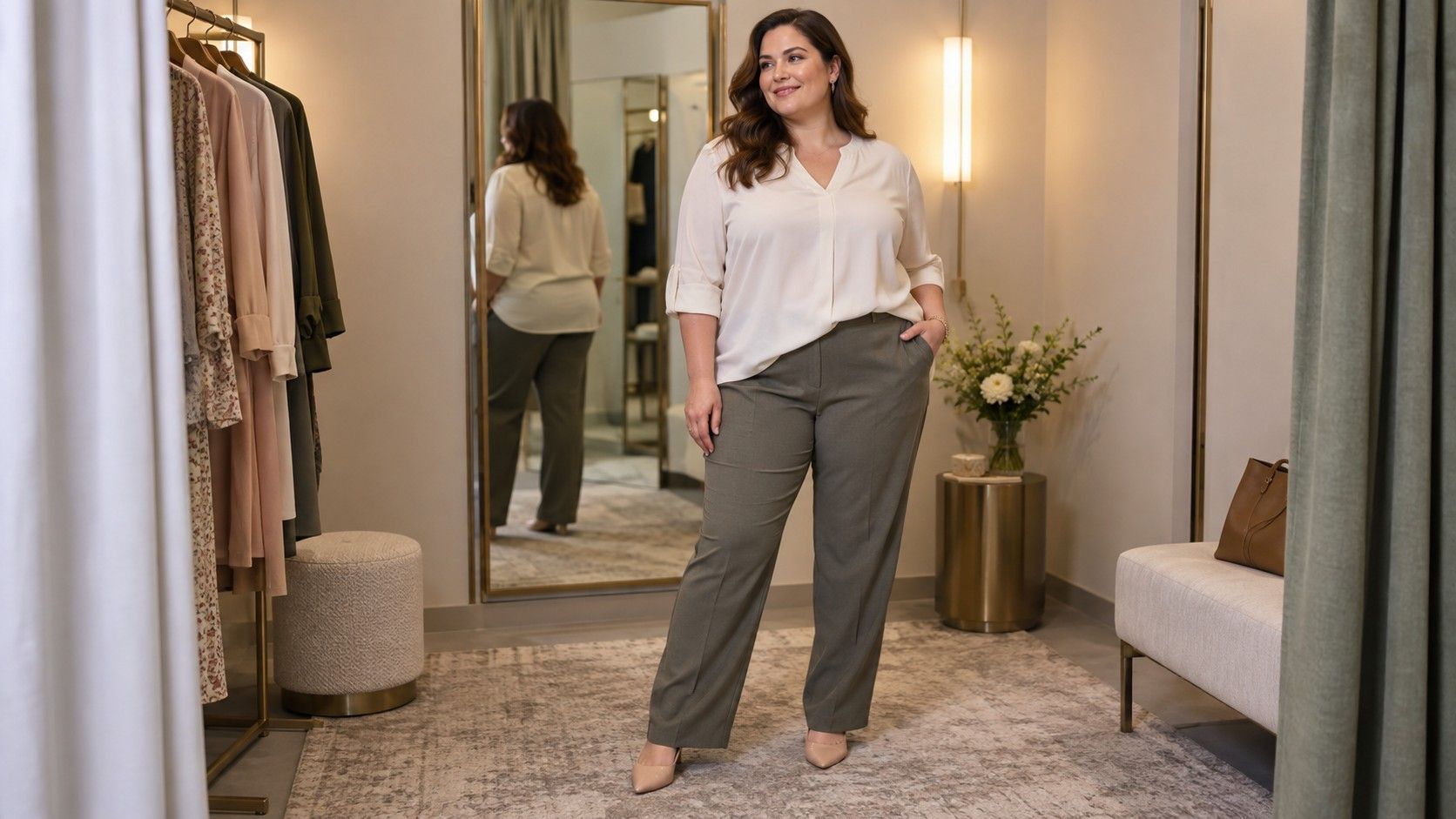
Straight-leg and wide-leg trousers both work well for rectangle body shape outfits, but they tell different stories. Straight trousers keep the vertical line clean and suit a column approach. Wide-leg trousers add movement and can be balanced with a closer-fitting top or cropped layer. High-rise styles can create an apparent waist if the waistband is comfortable; mid-rise styles often feel more relaxed and can look equally polished with a tucked shirt.
| Piece | What to check | Effect on the outfit |
|---|---|---|
| High-rise straight trouser | Waistband stays comfortable while seated | Offers gentle definition and a long leg line |
| Wide-leg trouser | Fabric falls smoothly from the hip | Adds volume below a cropped or fitted top |
| A-line skirt | Waist fits without spinning; hem moves easily | Creates a softer lower-half shape |
| Bias or slip skirt | Does not cling at the hip after walking | Keeps the line fluid with structured knitwear |
An A-line skirt is a straightforward way to add a little lower-half volume, but it is not mandatory. A straight midi skirt can look elegant with a textured sweater or jacket, especially when a front slit makes walking easy. Bias skirts are fluid but need an honest movement test; some cling after ten steps or show every underlayer in daylight. Keep the version that works with your real shoes and the pace of your day, not only with bare feet in a fitting room.
Pay attention to the rise and the hem at the same time. A high-rise trouser with a very long untucked top can cancel its own structure. A short top with a low-rise skirt can create a horizontal cut you may or may not enjoy. Neither is forbidden. The point is to see the whole outfit in a full-length mirror, then decide whether the proportions feel calm, energetic, or simply unlike you.
Layering and accessories can shift emphasis quietly
Layering is a useful tool because it lets you change the outline without changing your body. An open shirt over a tank top creates two vertical edges. A vest adds a third texture without bulky sleeves. A jacket with a defined shoulder can make the waist look relatively narrower even when the jacket hangs straight. Try one layer at a time; piling on a shirt, cardigan, scarf, and coat can erase the shape you were trying to create.
Accessories can direct attention as lightly as a punctuation mark. A necklace that sits at the collarbone, a scarf tied near the neck, or earrings with a little width can lift visual emphasis upward. A belt works best when it belongs to the outfit’s scale: a narrow belt may disappear over a thick knit, while a broad belt can overpower a delicate dress. When in doubt, take a phone photo from a few steps away. It reveals whether an accessory clarifies the outfit or has become its entire subject.
Shoes also influence the overall line. A pointed flat or low-profile trainer can extend a straight trouser line; a chunkier boot adds weight and may balance a larger knit or coat. This is not about making legs look longer at all costs. It is about checking whether the shoe, hem, and trouser width look like they arrived together rather than by accident.
Build a personal formula from what you actually wear
A good style formula for a rectangle proportion might be: straight jeans, fitted tee, cropped jacket, and a substantial shoe. Another may be: column dress, long blazer, and earrings. Keep several formulas because weather, work, and mood change. The most reliable outfits often have only one deliberate contrast, such as a soft skirt with a structured knit or a relaxed trouser with a sharp shoulder.
When shopping, photograph front, side, and back in ordinary light, then sit and move before deciding. Note the cuts that repeatedly work: perhaps a 25-inch cropped jacket, a mid-rise straight trouser, or dresses with a waist seam slightly above the natural waist. Those observations are far more useful than trying to obey a generic rectangle body shape chart. Personal style gets easier when your clothes make room for movement and leave enough of your own taste visible.