Pear body shape outfits are less about correcting hips than making the whole outfit feel intentional. A person may have hips that read wider than their shoulders, a clear waist, and thighs that determine whether a trouser works; none of that requires a uniform. The useful question is where an item puts visual weight, where it pulls when you sit, and whether you still like the line after an ordinary weekday rather than a two-minute fitting-room pose.
Start with the proportions, not a list of rules
The phrase pear or triangle body shape usually describes a proportion: the shoulder line appears narrower than the hip line, often with a waist that is easy to see. It does not prescribe a height, a size, or a need to create an hourglass outline. Two people can wear the same size jacket and have entirely different experiences because one needs room through the upper arm while the other needs it at the hip. Treat the label as a way to notice fit, not as a verdict from a mirror.
When an outfit feels slightly bottom-heavy, the cause is often more specific than “wide hips.” A very thin jersey top can visually disappear above substantial denim; a dark, clingy cardigan may end at the widest part of the hip; a stiff, pale trouser can hold its own silhouette. Looking at those separate effects is more useful than banning colours or prints. A brighter shirt, a square neckline, a collar, or a sleeve with a little structure can shift the balance without turning getting dressed into an engineering project.
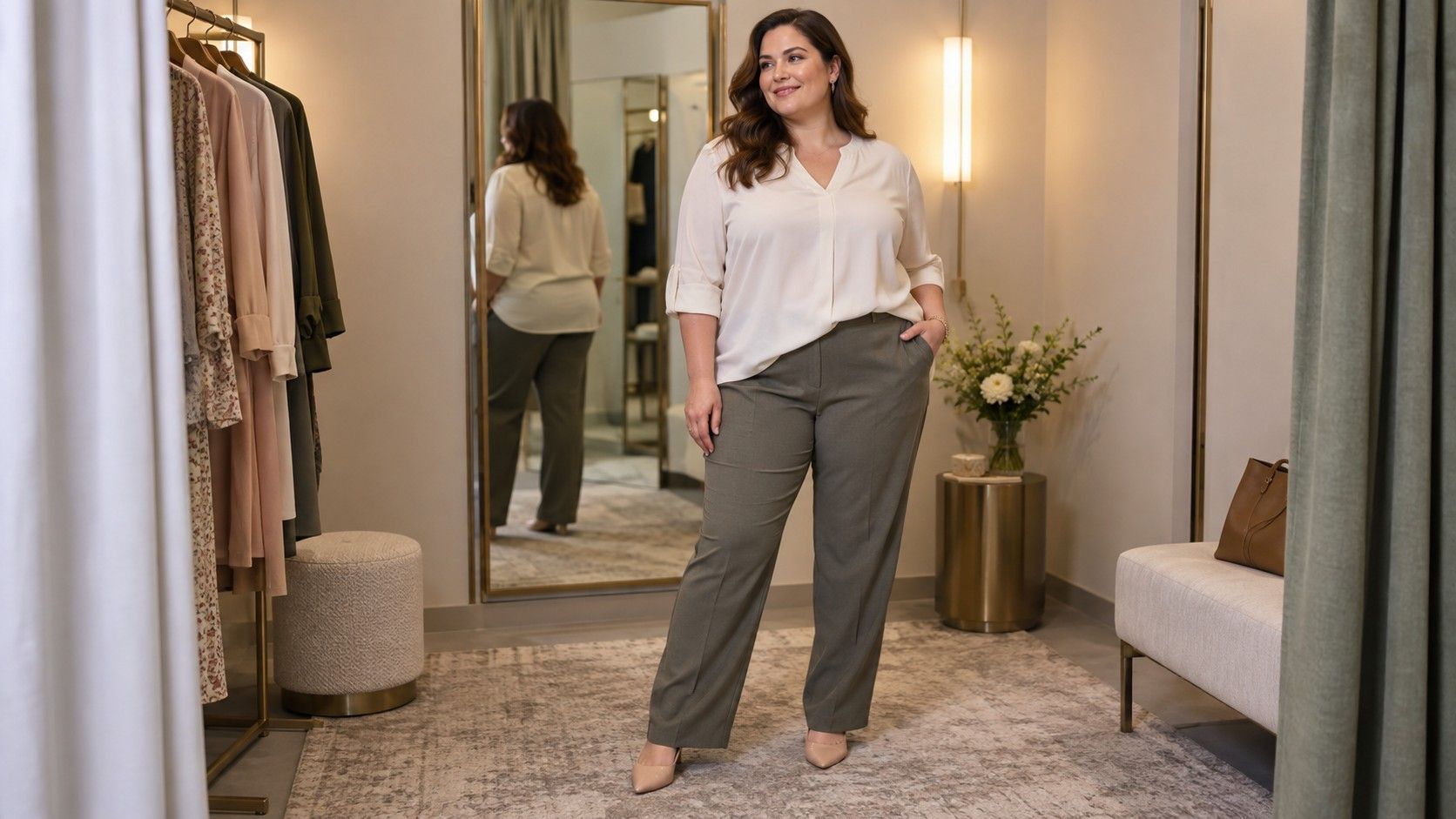
In a changing room, step back far enough to see the shoulders, waist, and hem at once. Then sit down, raise both arms, and turn sideways. If the waistband digs in only when seated, or a top climbs above the waistband after two arm movements, the outfit is asking for too much patience. The best how to dress pear shape advice is usually this plain: buy the garment that accommodates the body you have while moving.
Build the outfit from the shoulders down
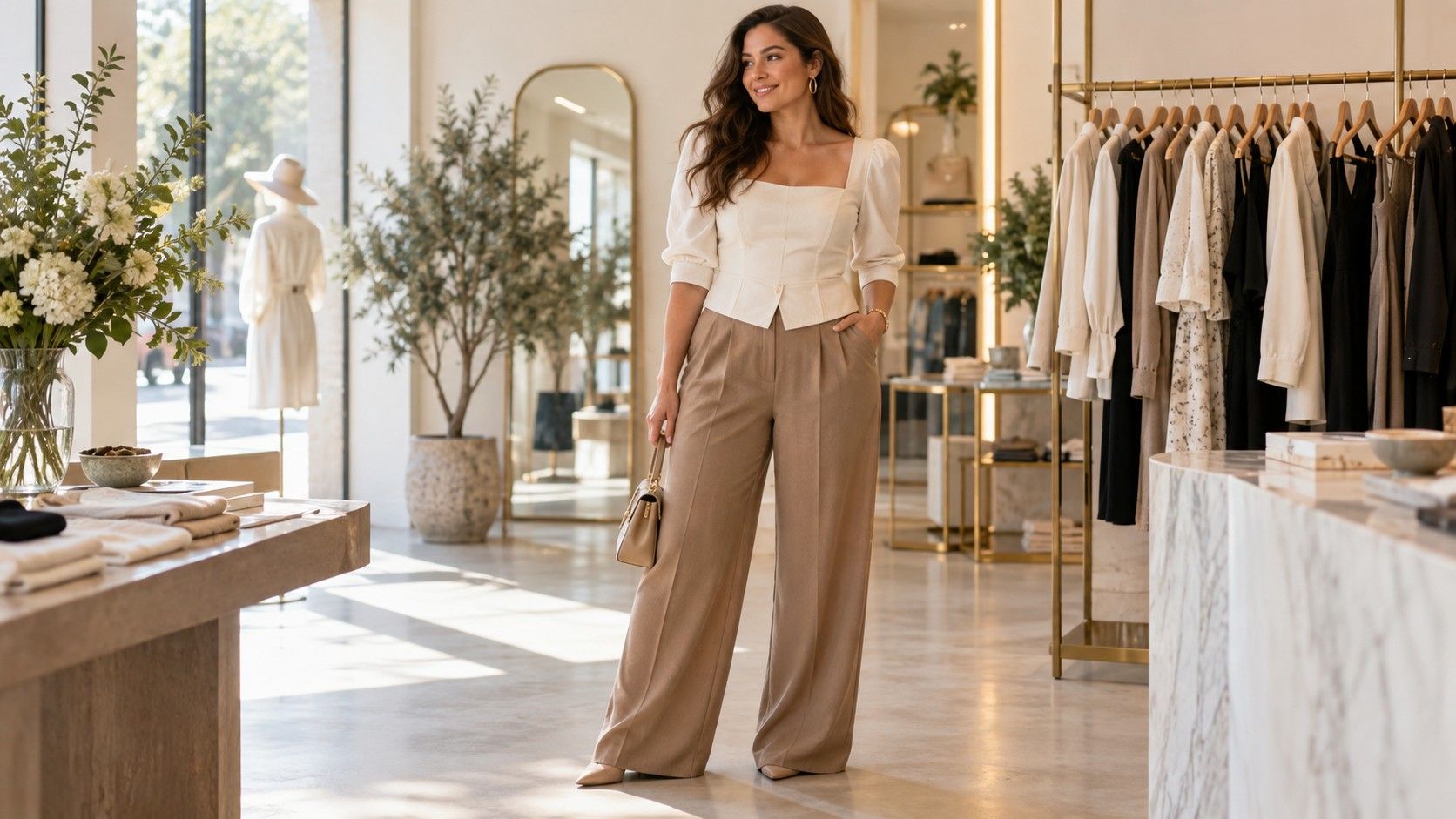
For everyday pear body shape outfits, an upper half with a readable shape is often the easiest starting point. A boat neck, open collar, crew neck with a substantial knit, or a simple V can give the eye a clear horizontal line near the shoulders. This is not a command to expose skin. A high neckline can work beautifully when the fabric has texture, the sleeve has a gentle puff, or the shoulder seam lands exactly where it should instead of drooping down the arm.
Structured shoulder does not have to mean office tailoring. A crisp overshirt, a cotton poplin blouse, a cardigan with a slightly raised shoulder seam, or a denim jacket with a collar all create enough presence above the waist. Very drapey tops can work too, but they need a deliberate finish: perhaps a half tuck, a visible belt, or sleeves rolled to the forearm. Without one, soft fabric sometimes gathers over the hip and makes the wearer spend the day pulling it down.
Pay attention to scale. A small ruffle at the neckline may be lost under a large coat, while a broader collar or horizontal stripe can still register from a normal distance. If you like print, placing it in a blouse or jacket is a simple way to add emphasis above the waist. If you prefer a quiet outfit, texture does the same job more subtly: ribbed knit, brushed cotton, boucle, or a visible weave against smoother trousers.
Trousers are decided by rise, fabric, and the seat
Wide-leg trousers are popular for good reason: when the fabric falls cleanly from the hip, they create a long uninterrupted line and leave room to walk. The detail that matters is the top few inches. A high rise may define the waist, but only if the waistband is comfortable when seated and the front does not pull open. A mid rise can be easier for people who dislike pressure at the narrowest point. Neither option is more flattering by default; the right one is the pair you stop noticing after lunch.
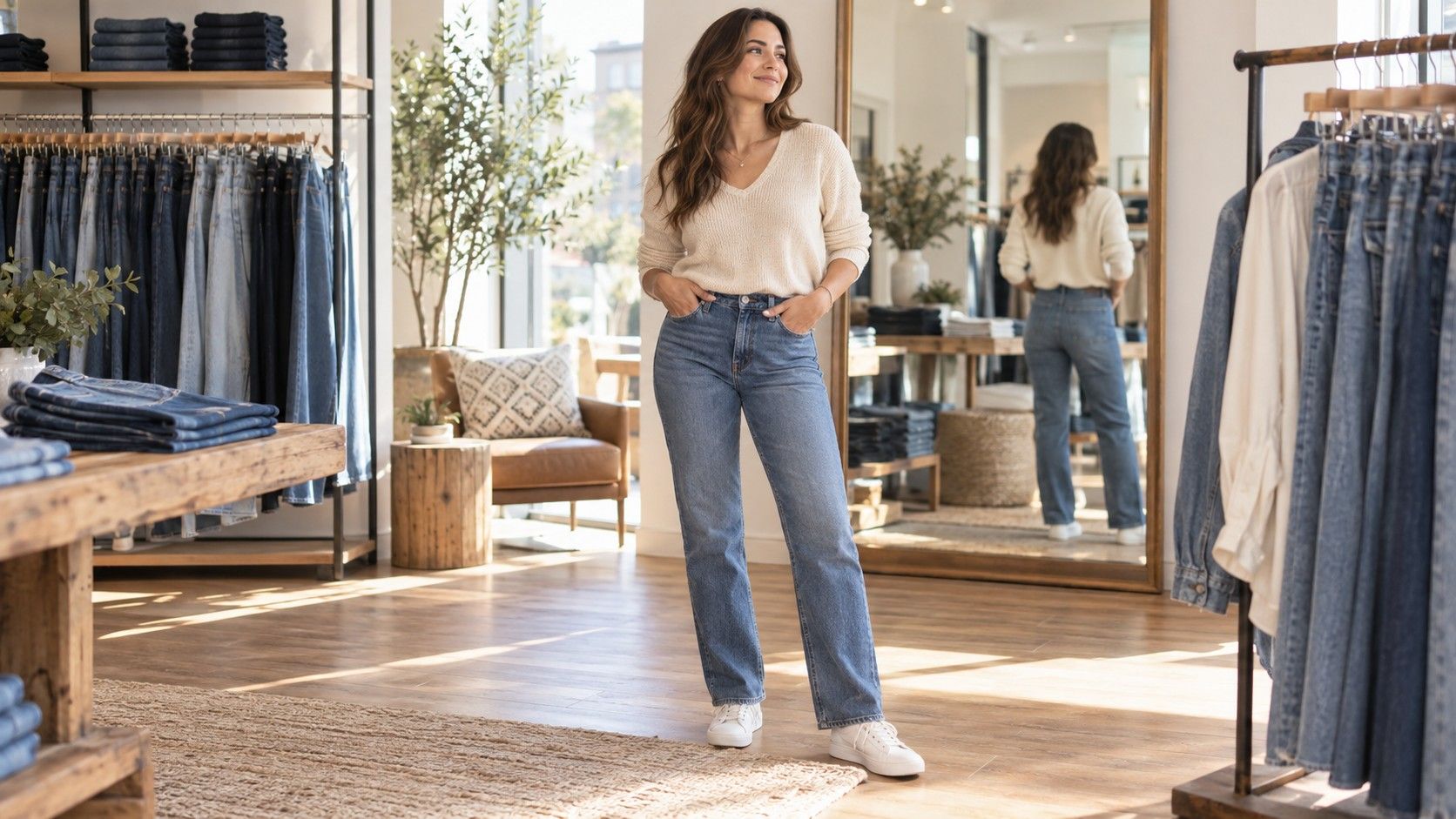
Straight jeans and gentle bootcut shapes are useful alternatives when a wide leg feels too much. Look for a back pocket that sits on the seat rather than far underneath it, and check that side pockets do not flare open. Pocket bags that show through a thin trouser fabric create extra width nobody intended. A firmer denim or a trouser with a small amount of stretch tends to skim instead of tracing every change in the fabric beneath it.
| Option | What to check | Why it can work |
|---|---|---|
| Wide-leg trouser | Clean fall from hip; waistband stays flat when sitting | Creates a long line without gripping the thigh |
| Straight jean | Seat fits before the waist is altered; pockets lie flat | Easy everyday shape with little extra volume |
| Bootcut or subtle flare | Flare begins below the knee, not at the widest thigh point | Balances the hem with the hip area |
| Tapered trouser | Enough ease at the upper thigh and ankle | Works well with a more defined shoulder or jacket |
Triangle body shape clothing does not require dark bottoms, although a darker trouser is convenient when you want an outfit to feel quieter. Colour and finish matter more than a blanket rule. Matte charcoal wool, indigo denim, olive twill, and cream linen all behave differently. If a light colour feels too prominent, try a fabric with drape and fewer stiff seams before deciding that the colour itself is the problem.
Dresses and skirts need a clear place to begin and end
An A-line skirt is a dependable option because it follows the waist and then gives the hip room, but its length and fabric make the difference. A skirt that starts flaring immediately can feel youthful or bulky depending on the fabric. One that is smoother through the upper hip and opens lower down often feels calmer. Stand in it, then take a long stride: if the front pulls into a tight arc, the size or cut is wrong no matter how neat it looks while still.
Wrap dresses can be excellent for a pear shape when the wrap stays closed and the waist seam lands where your body naturally bends. In thin jersey, though, a wrap may twist, creep upward, or reveal more than expected when you sit. A faux wrap with a stitched panel is less romantic in theory and far more reliable at a desk or on public transport. Fit-and-flare dresses, shirt dresses with a softly defined waist, and column dresses with a jacket over them offer similarly practical routes.
Layer length deserves its own mirror check. A cropped jacket that ends at the waist can make a dress or high-rise trouser look intentional. A longer blazer can be elegant if it clears the widest part of the hip rather than stopping directly on it. There is no forbidden hem, only hems that fight with the rest of the outfit. Try the jacket open and closed, with the shoes you will actually wear; a proportion that works with trainers may change with a heavy boot.
Use layers and details when you want more balance
A layer is useful because it can alter the outline without asking the base outfit to do everything. A cropped denim jacket over a simple dress adds shape at the shoulder and waist. A blazer with a gentle shoulder pad gives a T-shirt and straight jeans a clearer frame. A long cardigan can work if its knit is not so thin that it clings at the side seams, and if its hem is deliberately longer than the hip rather than hovering at it.
Accessories also have a job beyond decoration. A medium-scale earring, a scarf tied near the collarbone, or a bag carried high on the shoulder can draw attention upward. The aim is not to distract from the lower body; it is to give the eye more than one place to land. Conversely, a crossbody strap cutting across a delicate knit may create a line you did not want. Try the bag with the outfit before leaving its tag on the floor.
Fabric weight is a quiet but powerful choice. Crisp cotton and denim hold a clean shape; fluid viscose moves but may need a better underlayer; heavy rib knit adds texture and can feel balanced with fuller trousers. When an outfit seems visually uneven, changing a flimsy top for a slightly more substantial version often solves it faster than adding three accessories.
Keep only clothes that pass a real-life test
Shopping checks are not glamorous, but they prevent the common pile of almost-right clothes. Bring or wear the bra and shoes you use most. Test a top both tucked and untucked. For trousers, look at the front while seated and the back while bending slightly; this reveals a gaping waist, a tight seat, or pocket flare immediately. If you need a belt only to keep the waistband from falling, the hip and waist proportions of that cut may not be serving you.
Take a quick photo from the front, side, and back in ordinary light. Changing-room mirrors often stretch or soften the view, while a phone photo makes a jacket length or trouser break easier to judge. More importantly, notice whether you are thinking about the outfit or thinking about your body. A good outfit lets the second thought fade. That is a better standard for pear body shape clothing than achieving somebody else’s diagram of balance.