An inverted triangle body shape usually means the shoulders or upper chest read wider than the hips. It is a proportion, not a problem to correct. The useful question is whether an outfit lets you move comfortably and looks like the version of yourself you meant to dress that morning. A few choices around neckline, sleeve, waist and hem can change the visual weight of a look without requiring a new personality or a closet full of rules.
Start with the shoulder line you actually have
People often identify an inverted triangle shape from one photograph and then begin avoiding half their wardrobe. It is worth looking again in a plain T-shirt and straight-leg trousers, standing naturally rather than pulling the shoulders back for the camera. The shoulder line may be broad, athletic, square, gently sloped, or simply more noticeable beside narrow hips. Bust, ribcage, posture and sleeve seams all affect the impression.
Fit comes first. A shirt whose shoulder seam ends at the shoulder bone normally looks intentional; a seam several centimetres beyond it can make the upper body look borrowed from someone else. In a blazer, check that the armhole does not pull when you reach for a bag and that the lapels lie flat. Those practical details matter more than a label such as broad shoulders. When the frame is comfortable, the eye reads confidence rather than a styling problem.
There is no obligation to create an hourglass illusion. Some people love a clean, strong upper line and choose it on purpose. Others want more movement or presence below the waist on particular days. Treat those as two different styling goals, not as correct and incorrect ways to dress an inverted triangle body shape.
Use necklines and sleeves to set the mood above the waist
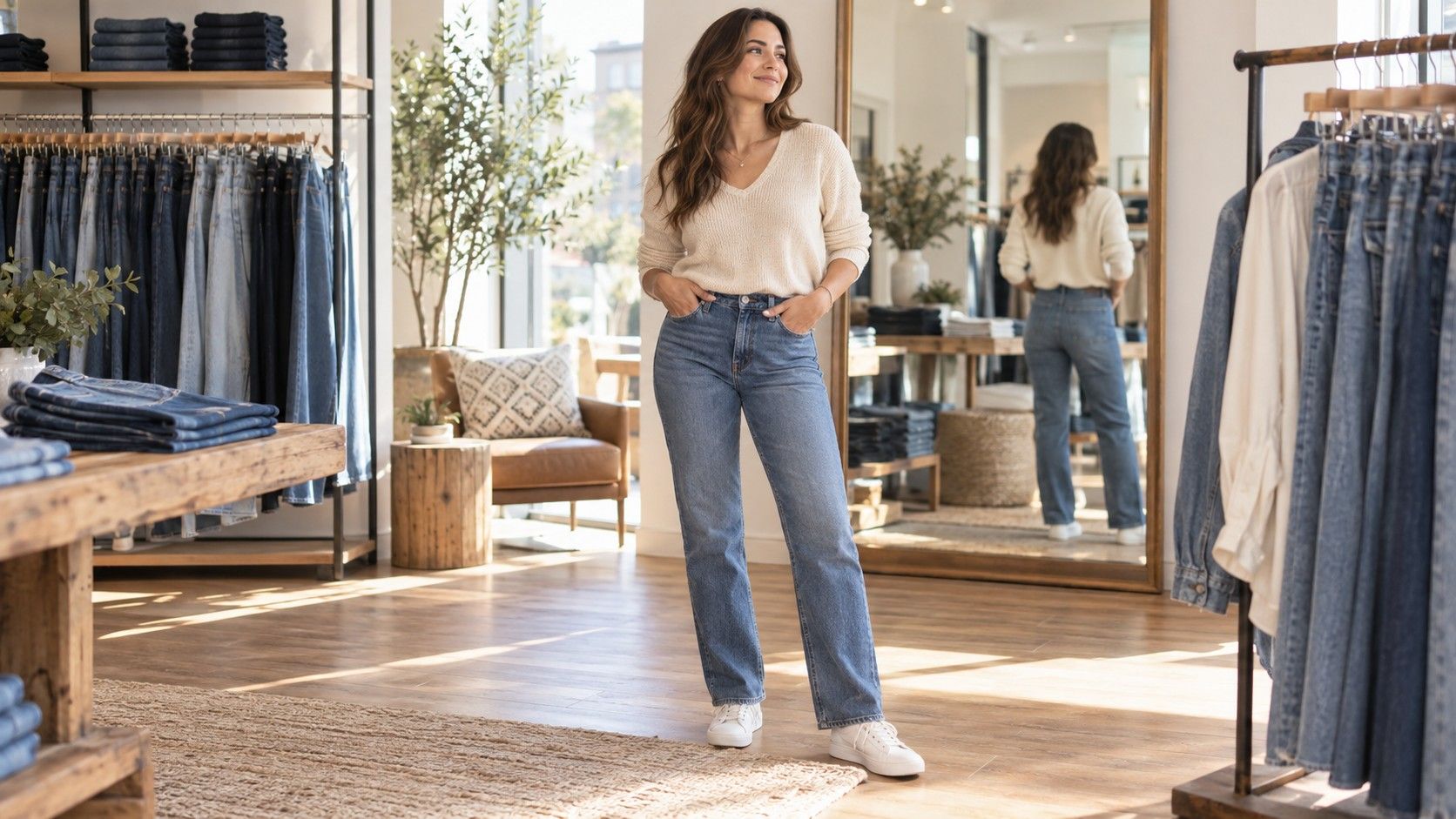
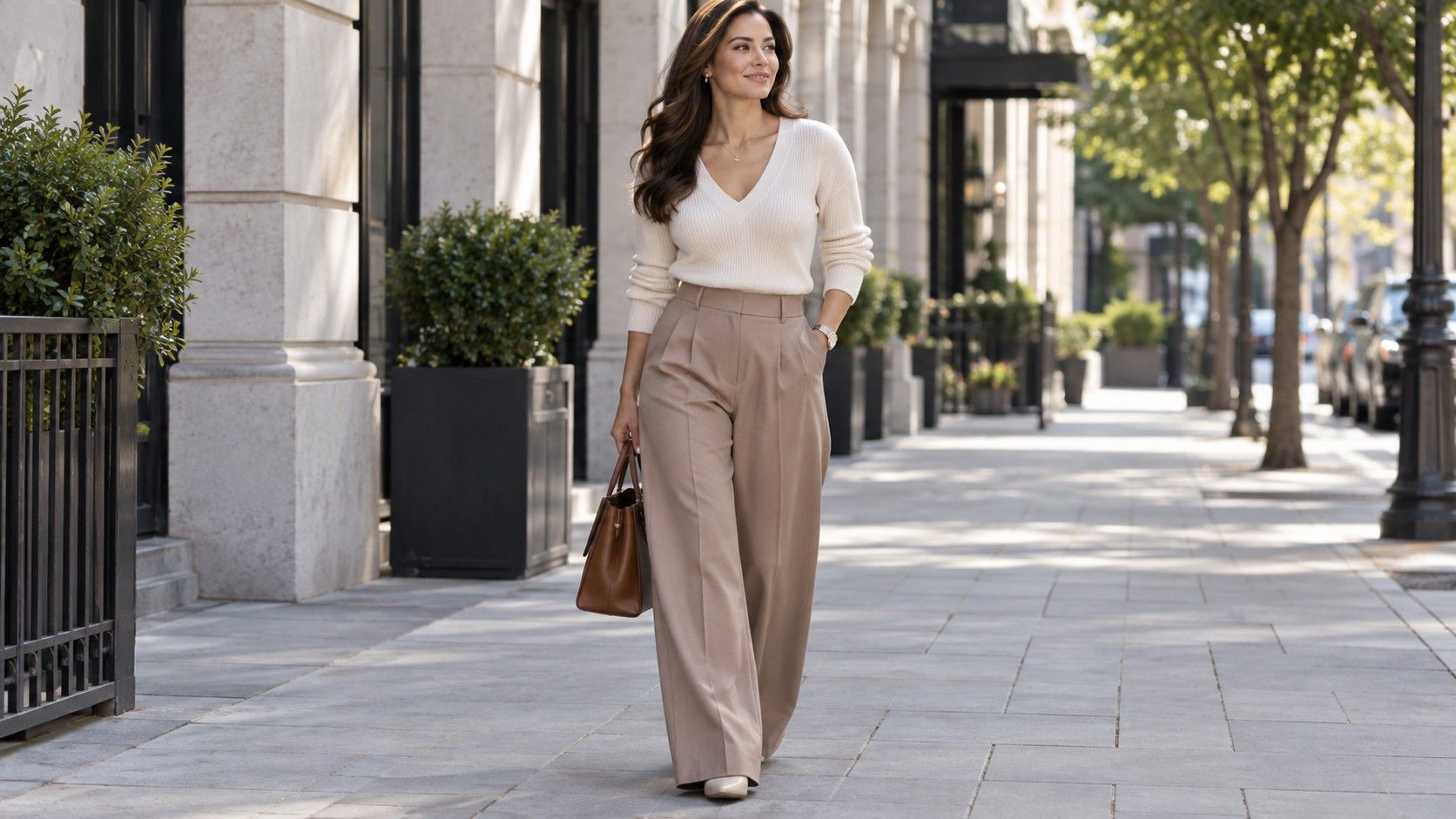
A V-neck, open collar, soft scoop or unbuttoned shirt placket introduces a vertical line through the centre of the torso. That line can make the upper body feel less like one solid horizontal block, especially with a close-fitting knit or a simple tank. The effect is quiet rather than magical: it gives the eye somewhere to travel. A deeper neckline is not required; even a shallow V or a relaxed collar can do the job.
Boat necks, high crew necks and strong off-the-shoulder cuts draw attention outward. They can be excellent when you enjoy your shoulders, but they are less helpful when a top already has a stiff fabric, a cropped boxy shape and a dropped seam. Try one statement at a time. A crisp white boat-neck top can look elegant with fluid trousers; adding padded sleeves and a tiny skirt may make the outfit feel top-heavy simply because every element is asking for attention in the same area.
Sleeve volume deserves the same practical test as any other garment. A soft raglan sleeve, a narrow cuff or a sleeve that falls close to the arm usually keeps the outline calm. Puff sleeves, cap sleeves and shoulder ruffles add width right where they sit. That does not ban them. It means that, if you choose them, a fuller skirt or relaxed trouser can make the whole look feel deliberate. Stand sideways in a fitting-room mirror as well as facing it; a sleeve that looks charming from the front may restrict the arm when you lift it.
Put movement and visual weight below the waist
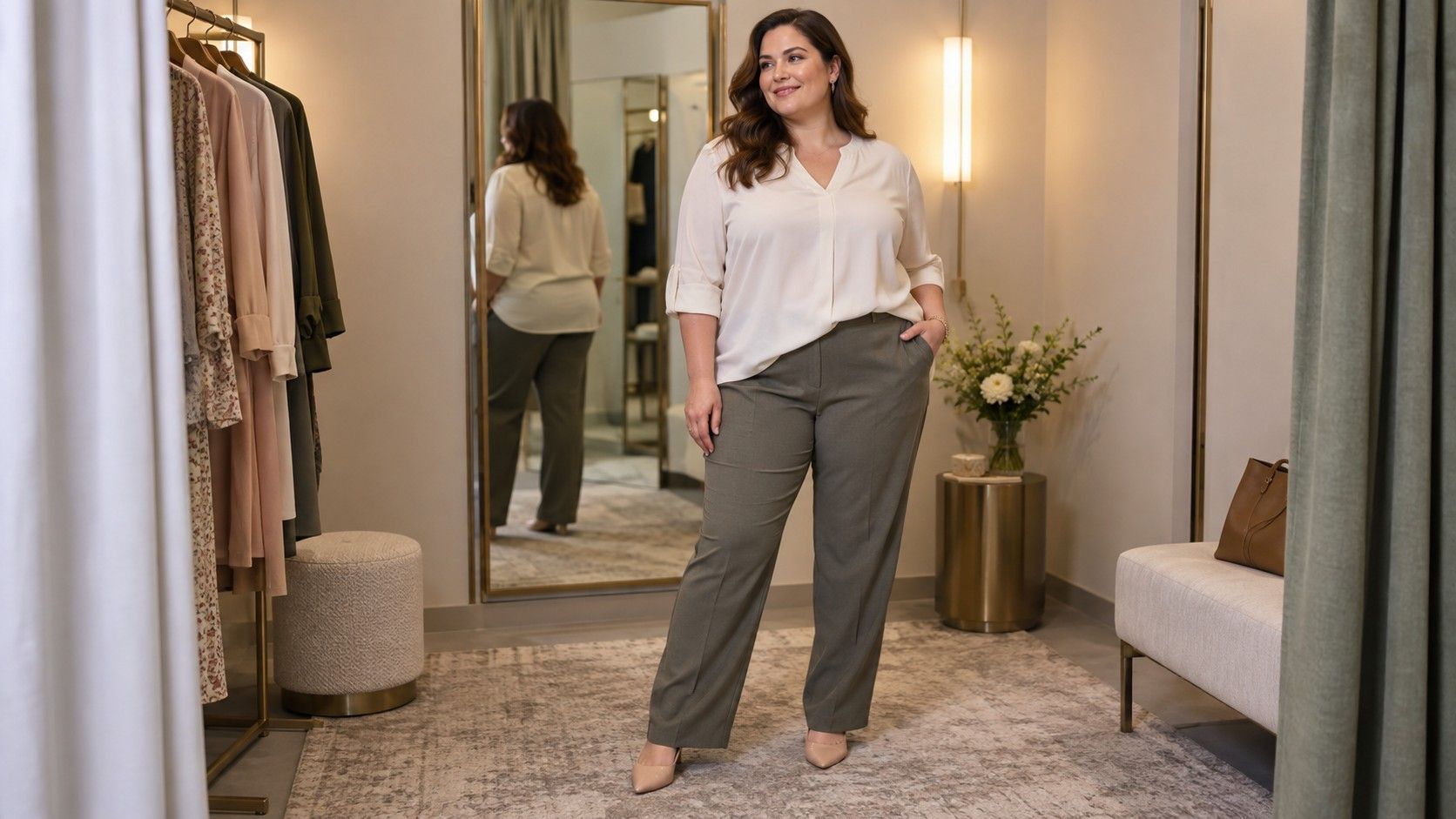
When the aim is to balance a strong shoulder line, bottoms are often the easiest lever. Wide-leg trousers, pleated trousers, cargo-style pockets, textured denim and A-line skirts add shape around the hips and legs without pinching the waist. The best version is one that still works when you sit down. A pair of wide-leg trousers that pulls across the crotch or catches at the thigh will not feel balanced after an hour, however good it looked under shop lighting.
A mid- or high-rise waist can provide a useful meeting point between top and bottom, particularly with a tucked knit or a fitted tee. It is not mandatory. A lower rise can work beautifully with a longer, softer top, as long as the hem does not end at the widest part of the torso by accident. Notice where the top finishes: a hem at the hip bone, a half-tuck, or a cardigan worn open each creates a different horizontal line.
| Outfit element | If you want a calmer upper line | If you want to celebrate the shoulders |
|---|---|---|
| Neckline | V-neck, open collar, soft scoop | Boat neck, square neck, halter |
| Sleeve | Set-in sleeve, raglan, narrow cuff | Cap sleeve, puff sleeve, shoulder detail |
| Bottom | Wide leg, A-line, pleats, texture | Straight leg, narrow skirt, clean column |
| Jacket | Soft lapel, single-breasted, gentle drape | Structured shoulder, cropped boxy cut |
Skirt fullness does not have to mean a dramatic circle skirt. A bias midi, a gently flared denim skirt, a wrap skirt with a little fabric at the hem, or a column skirt with a side slit can all make the lower half feel more present. Shoes matter too. A substantial loafer, boot or trainer visually grounds wide trousers; an extremely delicate shoe may create a different, more elongated effect. Neither is wrong, but trying the full outfit before deciding saves guesswork.
Choose outerwear by shoulder fit, not by size on the tag
Jackets are where many inverted triangle body shape outfits go wrong because the wrong structure is easy to tolerate for five minutes and irritating for a whole day. Begin with the shoulder seam, upper back and armhole. If a blazer feels tight when you hug yourself, sizing up may solve the movement but leave the shoulders drooping. A different cut, a softer fabric or a less built-up shoulder is often the better answer.
Single-breasted blazers with a little waist shaping, unpadded trench coats and relaxed chore jackets tend to follow the body rather than construct a new shoulder line. A long coat left open creates vertical space down the centre. If you wear a belt, place it where you naturally bend rather than pulling a bulky coat tightly at the narrowest point just because a styling tip says to do so.
Short jackets can still work. The useful question is where they end relative to the waist and hips. A cropped denim jacket paired with a full midi skirt gives a clear waist-and-hem contrast. The same jacket over skinny trousers can look sharp and intentional if you enjoy a graphic top-heavy silhouette. Test it with the bag you actually carry; a shoulder bag strap, especially a wide one, adds another horizontal element over the upper body.
Make favourite structured pieces easier to wear
Many people with broad shoulders own a blazer, leather jacket or utility shirt they love but rarely reach for because it feels too stern. Instead of retiring it, soften the surrounding pieces. Wear the structured jacket over a draped camisole or fine V-neck knit, then add relaxed jeans or trousers with room through the leg. The contrast keeps the jacket as the focal point without letting it dictate the entire outline.
Colour and texture can do similar work. A darker or matte top paired with lighter denim, a printed skirt or trousers with visible weave shifts attention downward without needing a complicated formula. You do not have to dress the upper half in black. A pale shirt under a charcoal coat can be lovely; simply avoid assuming that every bright colour must be hidden. The distribution of contrast usually matters more than the colour itself.
Accessories are small but noticeable. A long pendant, an open scarf or an unbuttoned cardigan adds a vertical break. A crossbody bag worn across the chest creates a diagonal, which can be useful or visually busy depending on the rest of the outfit. Before buying an accessory to solve a proportion issue, try changing one garment first. Often the answer is a trouser hem, a neckline or a better-fitting jacket rather than another object.
Build outfits around preference, not a correction project
For everyday dressing, keep a few dependable combinations in mind: a soft V-neck knit with wide-leg jeans; a fitted tank with an A-line skirt and cardigan; a relaxed button-down half-tucked into pleated trousers; a simple dress with a jacket that fits cleanly at the shoulder. These are starting points, not uniforms. Photograph the combinations you genuinely enjoy on ordinary days, not only the most dramatic ones.
The most useful fitting-room question is not whether an outfit makes the shoulders look smaller. Ask whether the clothes let you stand, sit, carry your things and recognise your own taste. A strong shoulder line can suit minimal tailoring, romantic skirts, sportswear and sharp monochrome looks. Once fit is handled, the choice belongs to style rather than a body-shape rulebook.