Finding your body shape is less dramatic than the internet makes it sound. You are not uncovering a permanent category or being issued a set of clothing rules; you are simply noticing where your proportions tend to sit and where clothes usually need adjustment. A soft measuring tape, a mirror, and ten quiet minutes at home give a more useful answer than a flattering photo taken at an angle.
Start with a question that clothing can actually answer
Before taking measurements, decide what you want from them. Perhaps trousers fit your hips but gap at the waist, jackets pull across the upper back, or dresses look straight even when the size is correct. Those are fit questions, and body-shape labels are only a shorthand for investigating them. They can point you toward a useful seam, waist placement, or fabric choice; they cannot tell you what you should wear.
It helps to approach the exercise in body-neutral language. “My shoulders are broader than my hips” is an observation. “My body is wrong for this blazer” is a story that a changing-room mirror can make feel true, particularly under harsh lights. Keep the first and discard the second. Bodies also shift with posture, activity, hormones, age, and the ordinary fact that no two sides of a body are perfectly identical.
Take four measurements under ordinary conditions
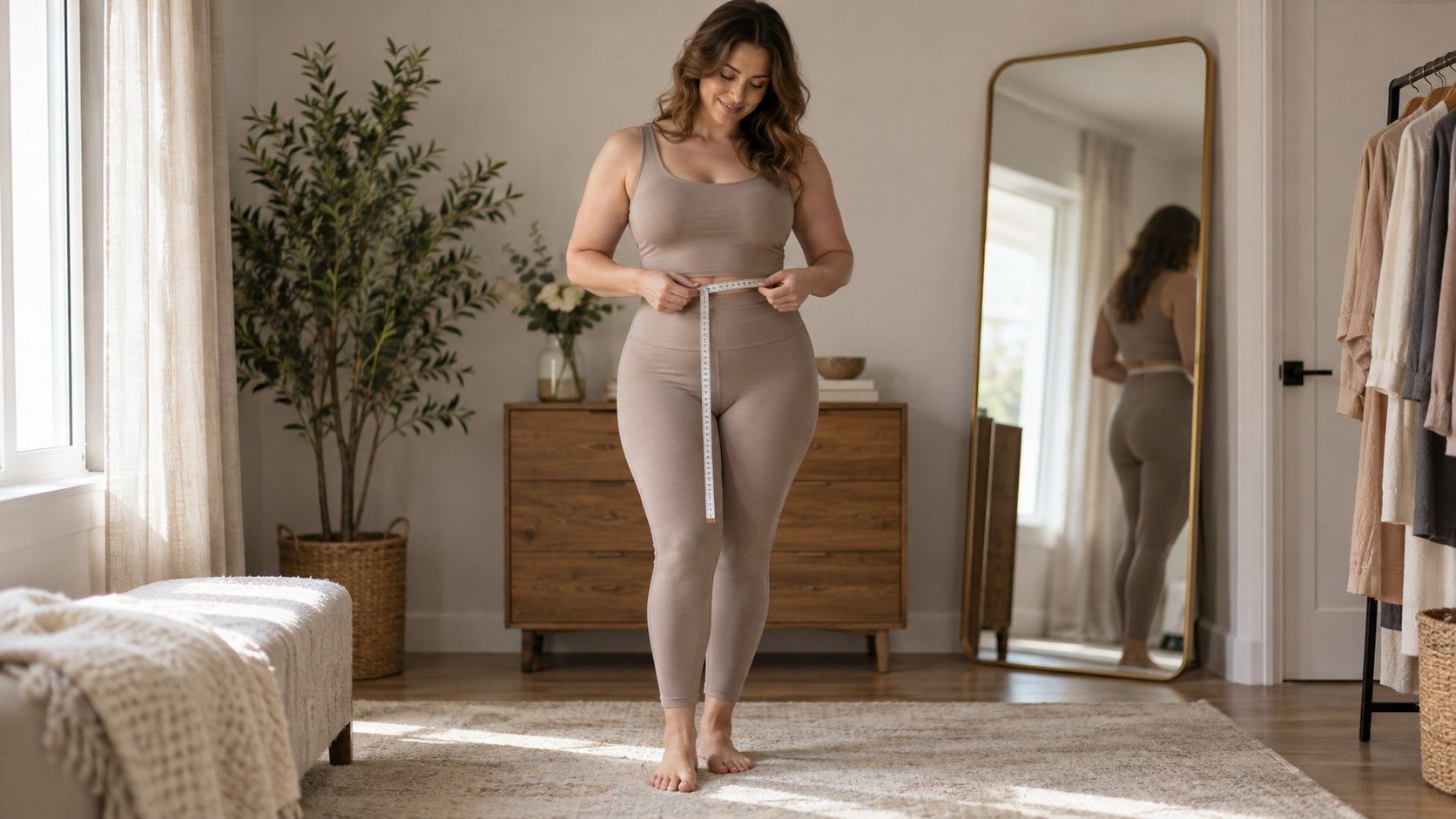
Use a flexible tape measure, stand in lightweight clothes or underwear, and keep your feet about hip-width apart. Do not pull your stomach in, lift your chest, or tighten the tape until it leaves a mark. The aim is to record the dimensions your everyday clothes meet, not to produce an impressive number. If you are measuring alone, look in a mirror to keep the tape parallel to the floor, then repeat each measurement once.
| Point to measure | Where the tape sits | Useful check |
|---|---|---|
| Shoulders | Across the broadest line from one outer shoulder point to the other | Keep arms relaxed; this is a width, not a full circumference |
| Bust | Around the fullest part of the chest | Wear your usual supportive bra if that reflects how you buy tops |
| Waist | At the narrowest comfortable point of the torso | Bend gently sideways first; the natural crease is a better guide than a waistband |
| Hips | Around the fullest part of hips and seat | Check the tape in the mirror, because it often rises at the back |
Shoulder width is often treated loosely, but it can explain why a size that fits the bust still feels restrictive in a shirt. If measuring the full shoulder line alone feels unreliable, place a well-fitting shirt flat on a table and measure the shoulder seam from edge to edge as a secondary note. It will not replace a body measurement, but it gives a practical comparison when shopping for tailored pieces.
Compare the pattern instead of chasing exact formulas
Put the four figures side by side and look for relationships. Similar shoulder, bust, and hip dimensions with a noticeably smaller waist often read as an hourglass-like proportion. Hips that are distinctly fuller than shoulders and bust may suggest a pear or triangle pattern. A shoulder or bust line that is more prominent than hips may point toward an inverted-triangle pattern. When the three outer measurements are fairly close and the waist is less defined, people often use rectangle or straight-shape language.
These names overlap more than quizzes admit. A two-inch difference can look substantial on one person and minor on another because height, torso length, muscle, and garment ease change the visual result. Treat a body shape calculator as a way to sort observations, not as a referee. If it gives one answer today and another after you remeasure, the sensible response is to keep the notes that repeated, rather than trying to force your body into one word.
Use photos and fit notes to catch what the tape misses
Measurements are a starting point, not a portrait. Take a simple front and side photo in the same close-fitting outfit, with the camera at about chest height and no posed twist through the waist. The point is not to inspect yourself for flaws. It is to notice lines: where a shirt hem catches, whether a jacket ends at the widest point of your hips, and whether a high waist actually sits at your natural waist or drifts upward under the bust.
A small fit diary is even more revealing over a few weeks. Write down which garment worked, which size you wore, the fabric, and the specific issue. “Wide-leg trousers in drapey fabric sat smoothly; stiff denim needed a belt” is far more actionable than “I am a pear.” Include your best-fitting bra, a favourite coat, and one garment that looked promising on a hanger but failed in movement. Patterns emerge quickly when the notes describe construction rather than emotion.
Turn the result into a changing-room experiment
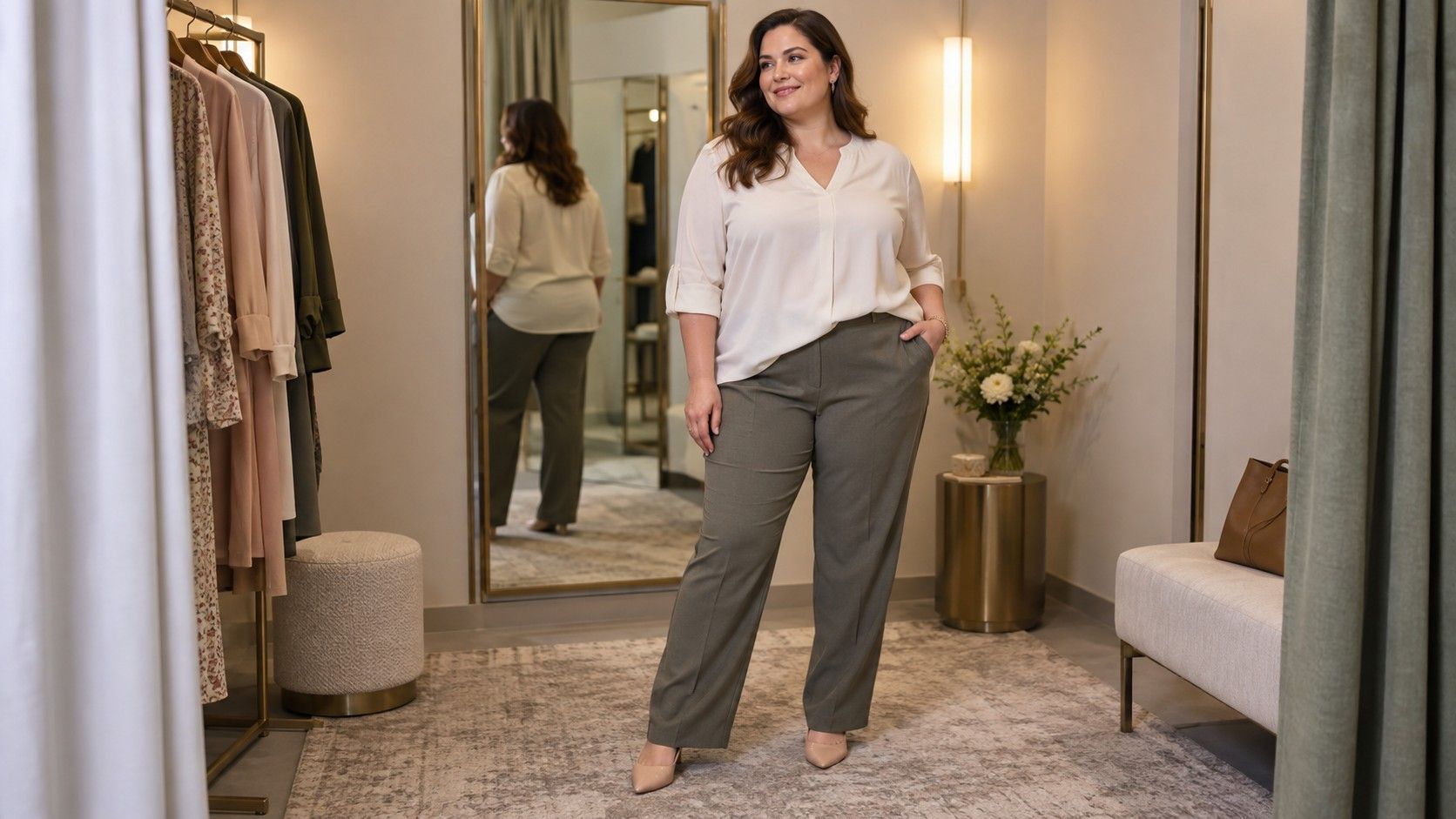
Once you have a likely pattern, test one variable at a time. If your waist is a useful visual anchor, compare a dress with a seam at the natural waist against one with an empire seam. If your shoulders carry more visual width, try the same top in a soft raglan sleeve and a sharply structured shoulder. The question is not which option hides you; it is which one feels balanced when you sit, reach for a bag, and see yourself in an ordinary window reflection.
Fit is also allowed to be local. You may prefer a fitted waist in dresses, a relaxed waist in knitwear, and a straighter line in coats. That does not make your body-shape result inconsistent. It means different garments have different jobs. Keep the measurements for future online size charts, but let comfort, movement, and your own taste make the final decision. The most useful label is the one that helps you buy fewer almost-right clothes.
Keep measurements useful as your wardrobe changes
Save the four measurements with the date and update them only when you need to buy something that depends on them. A tape measure is practical information, not a scorecard. Size charts vary wildly between shops, and comparing your current numbers with the garment’s finished measurements or fit notes can prevent a frustrating order. Add a note about preferred ease: perhaps you like a shirt to have room through the back, while a dress feels best closer at the waist.
Over time, the most helpful discovery may be that your favourite clothes share construction details rather than a single silhouette. A curved waistband, a shoulder seam in the right place, a wrap closure you can adjust, or a fabric with a little recovery can matter more than a category. Let your body shape measurements support those discoveries, then leave room for changing taste.