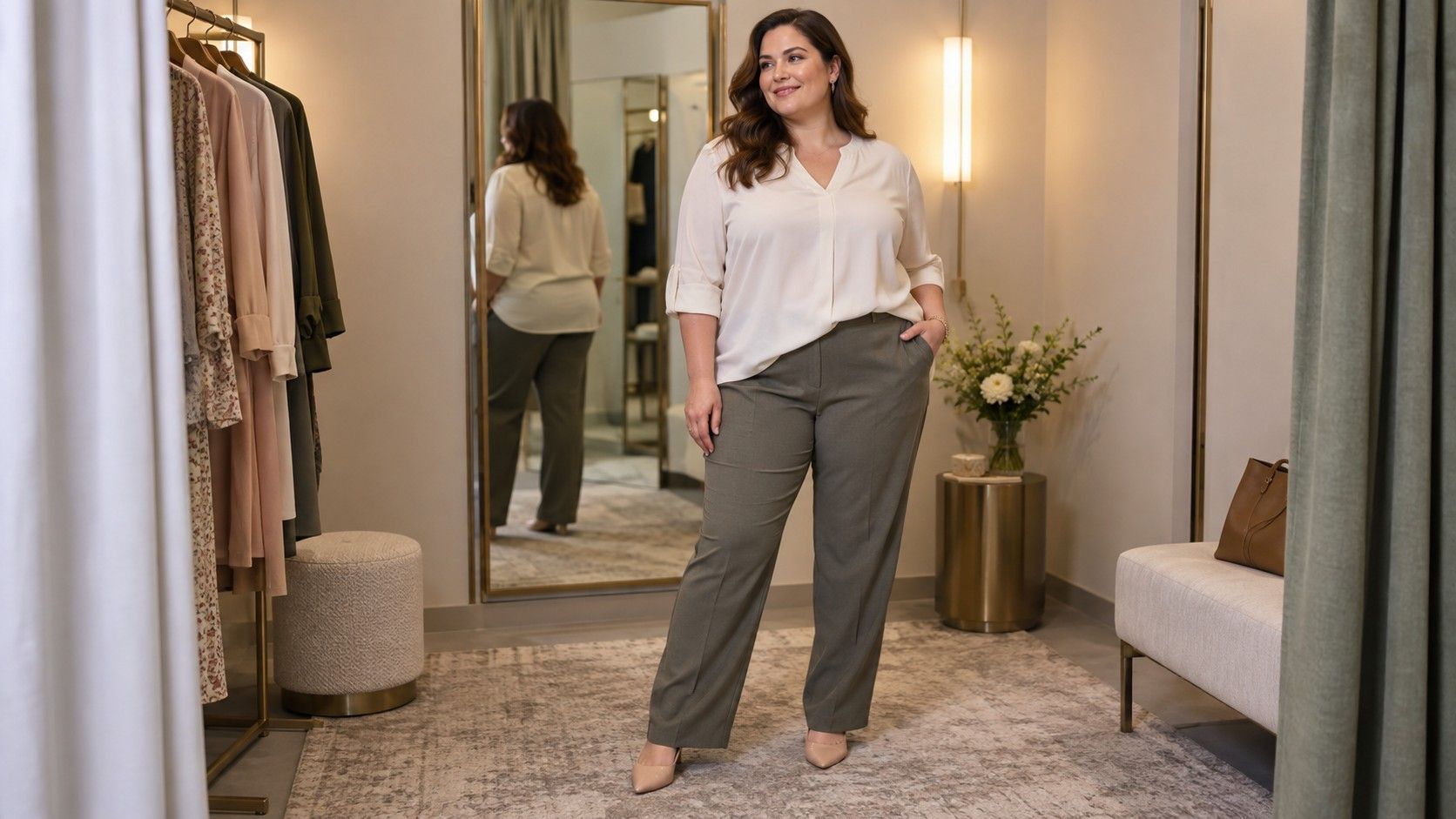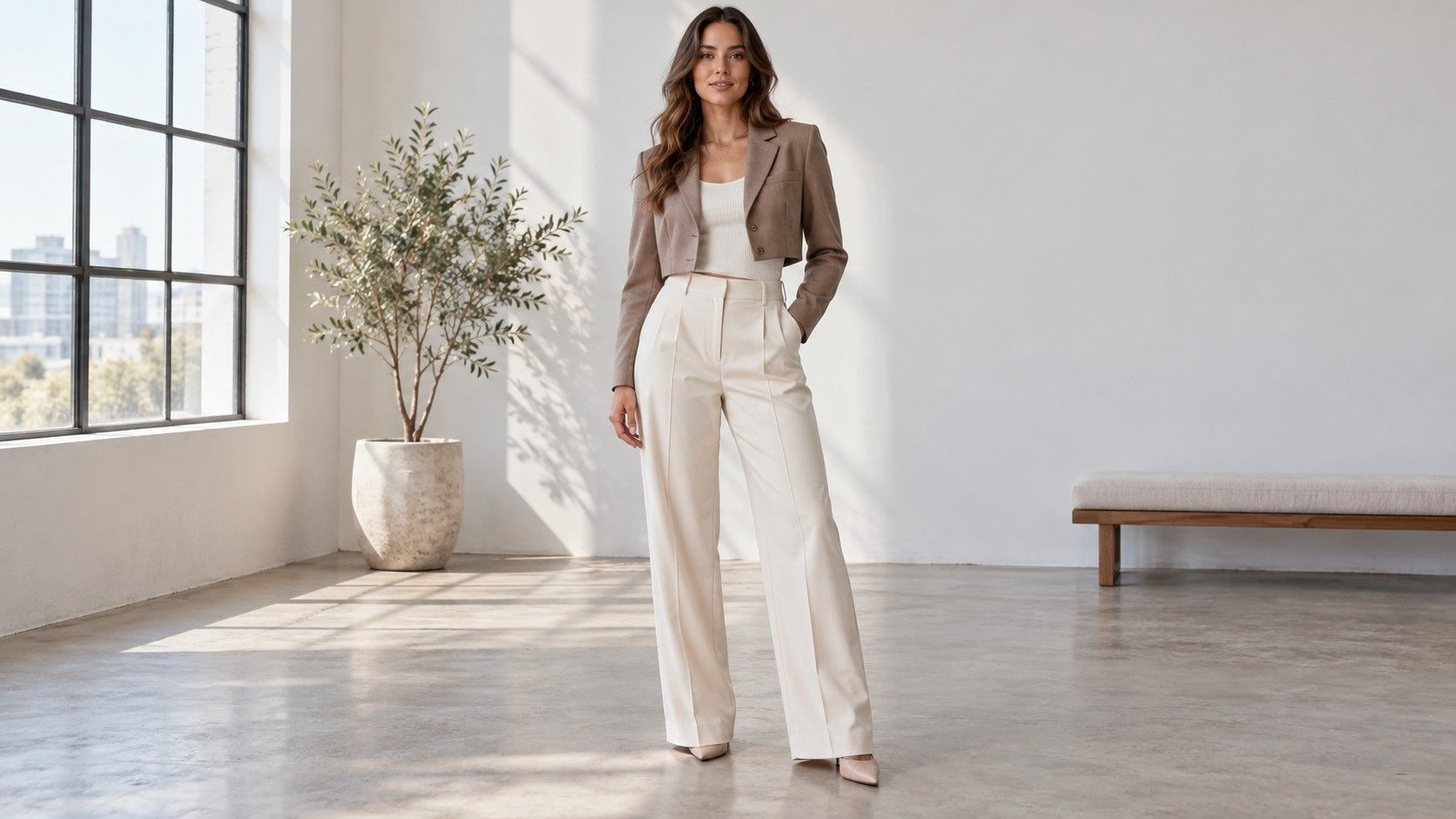
Long torso styling becomes easier when you stop treating length as a problem to disguise. The actual question is usually more practical: where should the waistband sit, where should a jacket end, and how much contrast can an outfit carry before it starts cutting you into pieces? A few small tests with clothes already in your wardrobe will answer more than an elaborate body-type formula ever can.
Confirm what you are seeing before changing the whole wardrobe
A long torso is not identical to short legs, although the two often appear together in a full-length mirror. Put on a fitted tee and a pair of familiar jeans, then compare the distance from shoulder to waistband with the waistband-to-floor line. The comparison matters more than any exact measurement. A high camera angle can make legs look shorter, while a low one can make the torso look longer, so do the check at eye level and in flat shoes.
Then test two rises with the same top. If a mid-rise pair makes your torso feel calm but a low-rise pair leaves a large uninterrupted stretch of top, you have located an outfit issue rather than a body issue. Some people love that longer line. Others prefer a clearer waist. Both responses are valid; the aim is to choose the effect instead of arriving at it by accident because a brand calls every jean "regular rise."
Use a high rise when it makes movement better, not just legs longer
High-rise trousers and jeans can bring the visual waist upward and shorten the apparent torso, but the useful pair does more than that. It stays put when you sit, does not pinch under the ribs, and has enough back rise to remain comfortable when you bend for a bag or reach a high shelf. A high rise that rolls at the waist may look sharp for one mirror photo and become irritating by the walk to lunch.
Look at the front rise as well as the label. A curved waistband and a slightly relaxed hip often sit more naturally than a rigid, straight band. If you have a longer torso, there can be more distance between the natural waist and hip, so a shallow rise may land at an awkward in-between point. The better answer may be a true high rise, or a lower mid rise deliberately paired with an untucked top; it is rarely the pair that almost reaches the waist.
| Outfit choice | Useful effect | Practical check |
|---|---|---|
| High-rise straight jeans | Moves the waistline upward without much volume | Sit down; the band should not press into the ribs |
| Mid-rise wide trousers | Creates a softer, longer column | Check that the crotch does not hang too low |
| Low-rise relaxed denim | Keeps the torso line long and casual | Make sure the top length is intentional |
Place contrast at the waist instead of everywhere
A long waist responds clearly to contrast: a tucked pale shirt with dark trousers, a belt over a dress, or a cropped knit over a longer skirt all establish a stopping point. That can feel satisfying because the eye gets a clear place to rest. But a belt, strong shoe colour, contrasting bag, and short jacket can create four competing stops. Start with one obvious break and let the rest of the outfit repeat colours or stay quiet.
Belts are easiest to judge in daylight. A narrow belt close to your trouser colour gives definition without becoming a line drawn across the body. A wider belt is more architectural and can be excellent over a simple knit dress, provided it is comfortable when seated. If the belt slides up or makes you adjust it all day, it is not improving the outfit. It is only taking up attention that could go toward the clothes themselves.
Try cropped tops and jackets with a deliberate base layer
A cropped top can be one of the most direct long torso outfit tools because it visually raises the waist. The word cropped covers a huge range, though. The easy version reaches the top of high-rise trousers and reveals no skin unless you lift your arms. It has the clean look of a shorter top without asking you to be aware of it every time you move. A very short tee may be fun, but it asks for a different level of ease.
Cropped layers work in the same way. A cardigan ending at the upper waistband can make a simple dress or tank-and-trouser outfit feel finished. For a blazer, test whether the hem ends at your natural waist or several inches below the hip; both can work. The difficult middle length often cuts straight across the fullest part of the hip, particularly when the jacket has a contrasting lining or stiff hem. Try it open and closed before deciding.
Build vertical lines without erasing the waist
There is no reason to abandon vertical lines because you want a defined waist. An open shirt, a long pendant, pinstripes, or a monochrome base can keep the eye moving from shoulder to hem. The useful combination is a vertical direction with one horizontal anchor. For example, high-rise black trousers, a black tank, and an open light overshirt give length, while the trouser waistband still establishes structure.
Layering becomes less effective when each layer ends in the same zone. A tee at the hip, cardigan at the hip, and jacket at the hip can make a longer torso look stacked rather than balanced. Vary the lengths: tuck the tee, wear a cropped cardigan, or choose an open layer that reaches below the hip. This is a small fitting-room experiment with a large payoff, and it avoids buying a new silhouette simply because the first attempt felt flat.
Use real-life fitting checks before deciding a proportion works
Long waist styling should survive ordinary movement. Sit at a desk, put your coat on, reach for something, and look at the outfit from the side. If the tucked shirt inflates into a balloon, use a thinner fabric or a partial tuck. If the cropped top rides above the trousers, try one with a deeper hem band. If a high waist leaves you feeling constrained after ten minutes, another rise is more sensible than forcing an allegedly flattering cut.
Keep a note of the combinations that make you feel settled: a high-rise straight jean with a tucked shirt, a column of one colour with a cropped cardigan, a belt on a dress that stays in place. Long torso outfits do not need to hide the torso or manufacture a single ideal ratio. They just need a waistline and set of layers that look intentional from the front, side, and the much more demanding reality of a normal day.