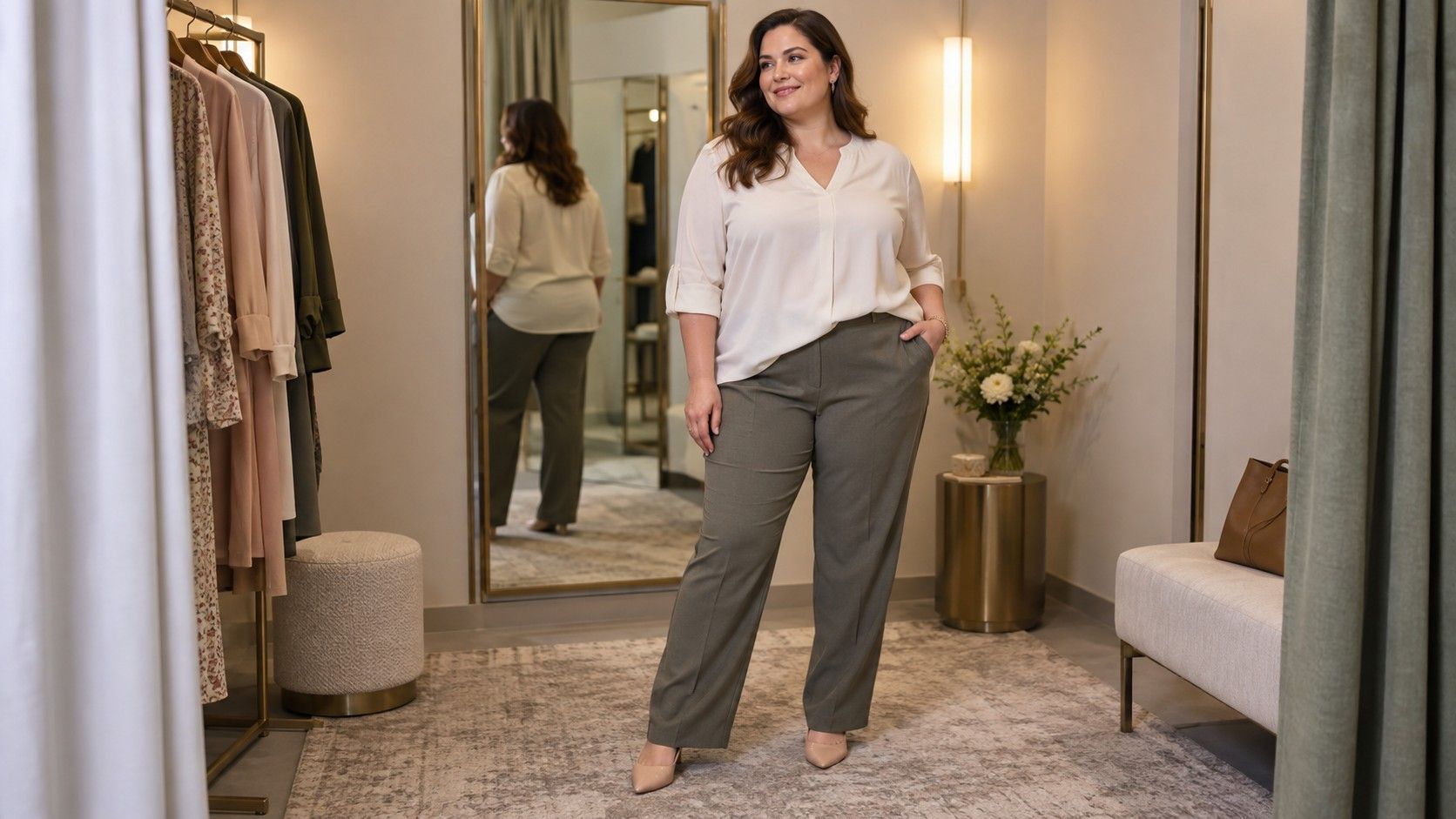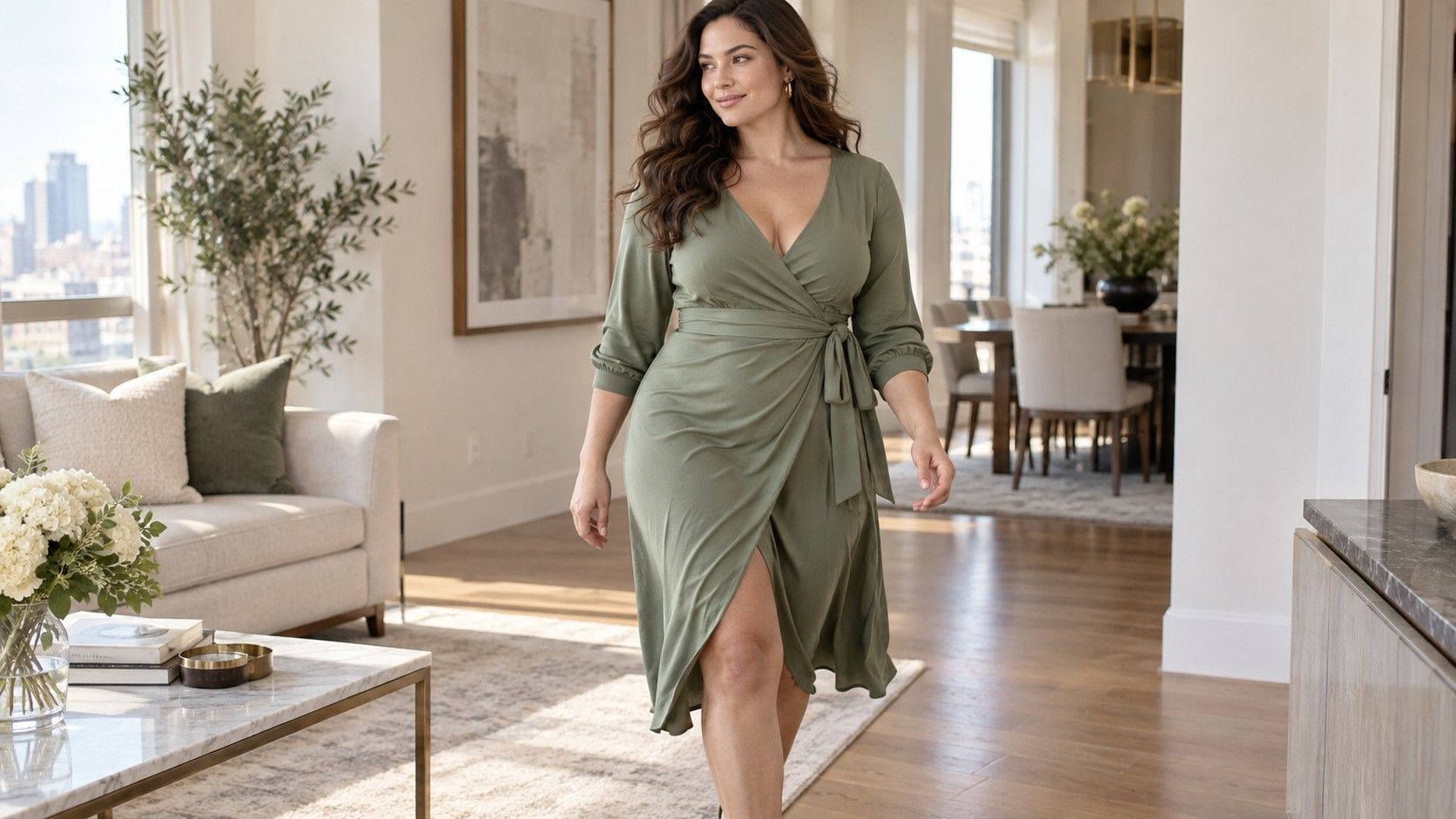
An hourglass body shape is usually described as bust and hips that are fairly balanced with a more defined waist between them. That description is useful only if it helps clothes fit better. It should not turn into a demand that every outfit be tight, belted, or deliberately curvy. The most reliable approach is to notice where a garment locates the waist, how the fabric moves over bust and hips, and whether you can comfortably live your day in it.
Recognise the proportion without turning it into a rulebook
If your bust and hip measurements are close and your waist is noticeably smaller, hourglass language may describe your overall proportion. Shoulder width can matter too: some people have shoulders that align with hips, while others have a slightly stronger shoulder line. Neither variation cancels the pattern. It simply changes what you may notice first in a structured jacket or a sleeveless dress.
The key word is proportion, not size. An hourglass silhouette can be petite, tall, straight through the ribcage, soft through the midsection, athletic, or full-busted. A dress that works beautifully on one person with an hourglass figure can feel wrong on another because the waist seam is two inches too high or the bodice has no room for the bust. Start with your own measurements and favourite garments, rather than trying to recreate a celebrity outfit from one photo.
Find the waist before buying the outfit
Clothes often lose their shape when the built-in waist is not where your natural waist actually sits. In a fitting room, put one hand at the narrowest comfortable point of your torso, then check the garment seam, belt loops, or shaping darts. A wrap dress may look promising on a hanger but tie under the bust; a high-rise trouser may reach the navel yet still sit below your natural waist. Those are different positions, and they create different balance.
Try sitting down before deciding. A belt that looks polished while standing can travel upward, pinch the ribs, or fold the fabric over the waist once you are at a desk. A good waist placement stays understandable in motion: you can breathe, reach for a shelf, and walk without continually resetting it. If you prefer a looser outfit, an open cardigan over a fitted base or a softly tucked shirt can suggest a waist without fastening anything around it.
Choose dresses and jackets by structure, not by the label
For hourglass figure outfits, dresses with an actual waist seam, adjustable wrap construction, gentle ruching, or carefully placed darts are often easier to fit than an unshaped tube. The useful detail is not “fitted” by itself. Look for enough room through the bust and hips, a seam that sits where you want it, and fabric that recovers after you sit. Matte jersey and lightweight crepe may drape cleanly, while a crisp poplin can need more precise tailoring.
Jackets deserve a shoulder and button test. Close the jacket at the point you would normally wear it, then look at the side view. If the lapels pull open, the bust may need more ease; if the hem splays, the hip area may be asking for a different cut or a shorter length. Single-breasted jackets with light waist shaping are a common easy starting point, but a boxier blazer can work just as well when left open over a close-fitting top. The deciding factor is whether the layers create bulk where you do not want it.
Use trousers and skirts to manage fabric at the middle
High-rise trousers often appeal to people with an hourglass body shape because the waistband can meet the smaller part of the torso before the fabric travels over the hips. Yet rise alone does not guarantee fit. Check whether the waistband lies flat at the back, whether the front zip pulls when seated, and whether the trouser has enough hip ease to move without creating diagonal strain lines. A belt can tidy a small gap, but it should not be the only thing holding the garment in place.
| Garment choice | What to inspect | A practical alternative |
|---|---|---|
| High-rise trousers | Back-waist gap, seated comfort, hip ease | Curved waistband or a size adjusted at the waist |
| Pencil or straight skirt | Walking room and whether the waistband rolls | Small back vent, stretch lining, or a softer A-line |
| Full skirt | Where volume begins and whether the waistband adds bulk | Flat-front pleats or a less gathered fabric |
| Low-rise denim | Whether it cuts across the widest hip point | Mid-rise with a contoured waist |
Skirts are a useful place to compare construction. A skirt with a flat front and gentle volume at the sides can feel very different from one with dense gathers under a thick waistband. Neither is universally better. Put on the top you would actually wear with it, not just the fitting-room camisole, and observe the waistline after ten minutes of walking. The quieter choice is often the one you keep reaching for because it does not ask for attention.
Adapt trends to your own comfort and movement
Trend advice for how to dress an hourglass body shape often reduces everything to “show your waist.” That can be useful on the days you want definition, but it is far too narrow for a working wardrobe. Oversized shirts, wide-leg trousers, straight coats, and relaxed knitwear can all work when their proportions are intentional. A roomy shirt may look balanced with a partial tuck or a shorter hem; wide trousers may feel grounded with a close-fitting tank or a cropped jacket.
Build an outfit around one contrast rather than five. If the trousers are wide and drapey, you may want a more stable shoulder line. If the top is soft and long, a clear waistband or a straighter skirt can prevent the whole look from feeling unfinished. Then ignore the formula if it does not feel like you. The best hourglass style guide ends with a familiar standard: clothes should let you move, sit, eat lunch, and forget about adjusting them every three minutes.
Make alterations part of the decision
A nearly right garment can be worth more than a supposedly perfect category if the adjustment is simple and affordable. Hemming trousers, shortening straps, moving a button, or taking in a waistband can change the whole balance. More complex changes through the shoulders, bust, or hip curve need a fitting before you commit. Ask a tailor what is realistic while you are still able to return the garment; this is usually more honest than assuming every seam can be remade.
Alterations are not evidence that your body has failed standard sizing. Ready-to-wear is made around averages, and bodies are not averages. For an hourglass proportion, a small waist adjustment after choosing enough room through bust and hips is often a sensible route. Choose the size that gives movement at the fullest point, then decide whether the rest deserves tailoring, a different cut, or simply a return.