The best dress for body shape is usually the one that lets you move, sit, and forget about adjusting it every five minutes. That sounds almost too obvious, yet dress shopping still gets reduced to a list of orders: this shape must wear a wrap, that shape must hide a waist, everybody else gets told to create one. A more useful approach is to compare dress silhouettes on your own proportions and notice what changes when the shoulder, waist seam, skirt, and fabric work together.
Why one dress can look different before you even reach the mirror
A silhouette is the outer line a dress makes from shoulder to hem. It is not a verdict on a body. Two people can wear the same midi dress in the same size and get a completely different result because their torsos, shoulder width, bust placement, and leg length distribute the fabric differently. A dropped waist may make one person feel relaxed and modern, while on another it can sit at the fullest part of the hip and feel like the dress is sliding downward. Neither reaction is a failure of the body or the garment; it is information about the relationship between them.
Start with the least glamorous check: stand sideways, lift both arms, take a few normal steps, and sit on a chair. If the shoulder seam pulls toward your neck, the bodice is asking the wrong part of the dress to do too much work. If the front hem climbs when you sit, a longer torso, a fuller seat, or a narrow walking slit may be involved. These details matter more than a label such as pear, rectangle, apple, or hourglass. Body-shape language can help you describe a pattern, but it cannot tell you where a particular waist seam will land.
Compare wrap, shift, and fit-and-flare as tools, not prescriptions
A wrap dress changes its line through a diagonal front and an adjustable tie. That can be useful when your bust and waist need different amounts of room, because you can control the overlap rather than hoping a fixed button placket behaves. Check the neckline while you bend forward and raise an arm: a wrap that opens at the chest may need a small snap, a camisole, or simply a different cut. The tie should cinch at a comfortable point, not cut across the ribs in a way that makes lunch feel like a design flaw.
A shift dress hangs more directly from the shoulders, with little shaping at the waist. It often feels good on days when you do not want a waistband, but its apparent simplicity makes shoulder fit especially important. Look for enough space across the upper back and enough length through the torso. A shift that is too narrow can catch at the hip and turn into a tube; one that is too wide in a stiff fabric can look detached rather than easy. A short shift with opaque tights and boots may feel balanced where the same shape at a calf-length hem feels heavy.
Fit-and-flare dresses use a fitted bodice and a skirt that opens below the waist. They are popular among dress styles for body types because the structure is easy to read, not because they magically suit everyone. The useful question is where the flare begins. A seam at your natural waist gives one effect; an empire seam begins higher and creates more vertical space below the bust; a dropped seam changes the center of the outfit. Try each one with the shoes you would actually wear. A skirt that seems charming barefoot in a fitting room can become awkward once a low heel changes the hem break.
| Silhouette | What to check first | Useful adjustment |
|---|---|---|
| Wrap | Neckline coverage and tie position | Change overlap, add a snap, or size for the shoulder |
| Shift | Shoulder width and hip ease | Test a shorter hem or a softer fabric |
| Fit-and-flare | Exact waist-seam placement | Compare natural, empire, and dropped seams |
| Column or sheath | Walking room and back fit | Use a slit, stretch lining, or light tailoring |
Find the waist seam instead of chasing a perfect waist
Waist seams are a practical fitting detail with an outsized visual effect. The natural waist is often near the narrowest part of the torso, but it is not always where a ready-to-wear dress puts its seam. Hold the dress against you before changing and notice whether that line sits above, at, or below your comfortable bend. Then put it on and look from the side. If the seam rides upward under the bust, the bodice may be too short. If it gathers over the hip, the torso may be too long or the skirt may need a different starting point.
There is no obligation to emphasize the waist. Some people prefer a straighter line because it feels calm, athletic, or less fussy. Others like a belt because it makes a loose dress feel intentional. The test is whether the change helps the whole outfit, not whether it produces a textbook outline. A thin belt can interrupt a long torso sharply; a wider belt can make the same dress feel grounded. Try both, then remove them and decide which version lets the fabric fall without constant negotiation.
Use fabric drape to change the effect before changing your body
Fabric can alter a dress silhouette as much as the cut. Crisp poplin holds space away from the body, which gives a shirt dress clear edges but can add volume at a gathered skirt. Jersey follows the body and is forgiving when it has enough recovery, yet a thin jersey may cling to a slip seam or show every pocket edge. Crepe usually skims rather than stands away, while viscose can create beautiful movement but may pull across the bust if the pattern is too narrow. Read the fiber label, but also pinch the fabric and let it fall: the drape in your hand is often more revealing than the marketing description.
Lining is worth checking because it changes both comfort and motion. A smooth lining can stop a skirt from catching on tights, while a tight polyester lining can make a breathable outer fabric feel surprisingly hot. In a changing room, walk toward a window or bright light and look for transparency at the skirt and neckline. Then place one hand in a pocket if there is one. If the pocket bags pull the front out of line, that is not a minor inconvenience; it changes the silhouette every time you use it.
A three-dress try-on method that produces better comparisons
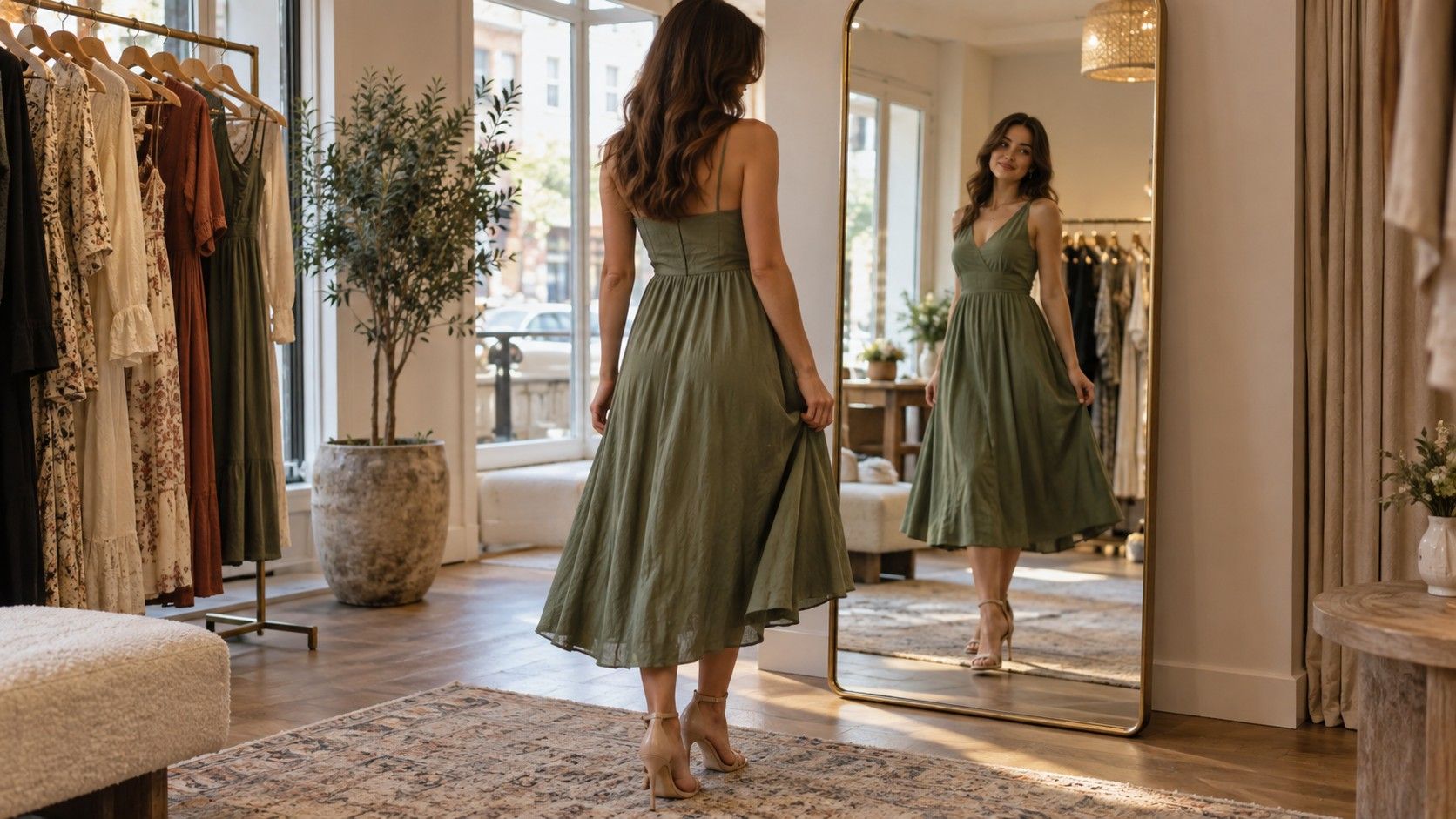
Bring three dress silhouettes into the fitting room: one familiar, one close relative, and one genuinely different. For example, compare a wrap midi, a shirt dress with a belt, and a fit-and-flare dress with a defined seam. Keep the color family similar where possible so you are not really comparing navy to a distracting print. Photograph the front, side, and back in the same shoes, then wait five minutes before deciding. Immediate reactions can be useful, but they can also be the relief of finding a dress that zips.
Make a small note after each try-on: shoulder feels free or tight; waist sits high, low, or neutral; skirt swings or catches; neckline stays put; hem works with my usual shoes. This turns the vague question of which dress is most flattering into a repeatable fit record. Over time you may discover that you like a defined waist but not a gathered skirt, or a shift shape in fluid fabric but not in linen. That is the point of comparing dress silhouettes: not to earn a label, but to recognize the construction choices that make you feel more like yourself.