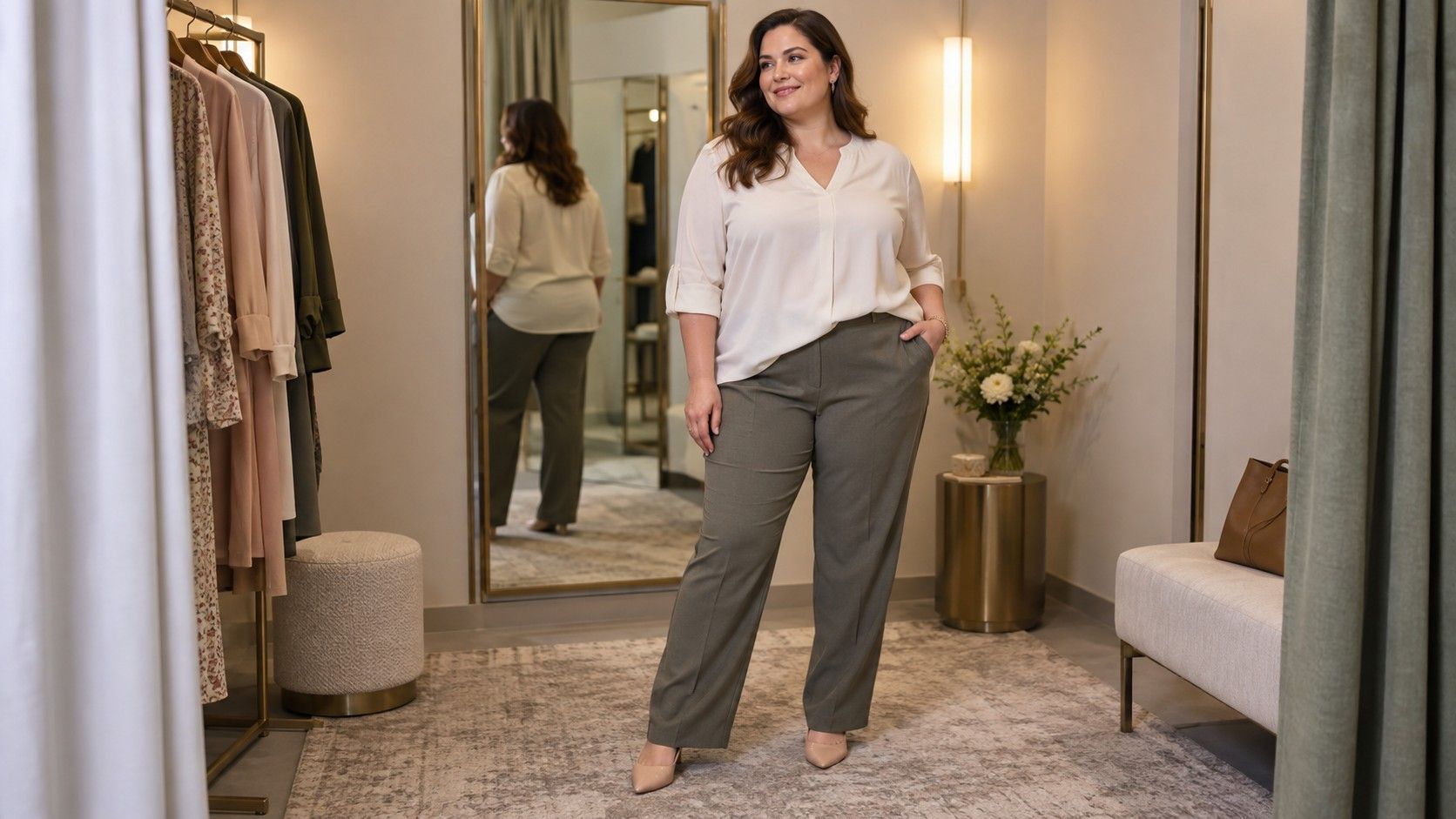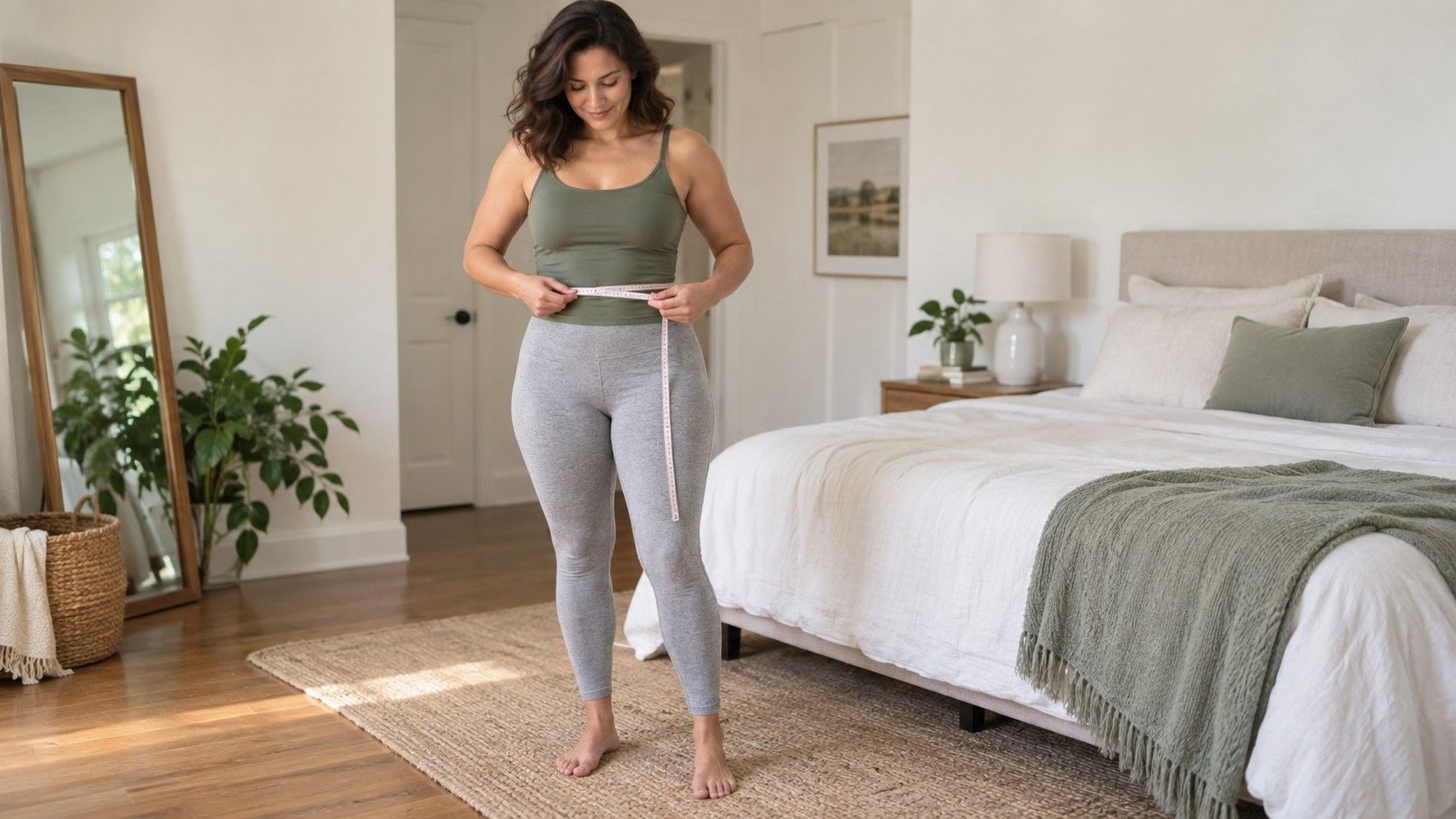
A body shape test is useful when it replaces a vague changing-room feeling with a few clear comparisons. It is not useful when it promises to reveal your “real” body in thirty seconds, then sends you toward a wardrobe of rules. The practical version begins with measurements, adds a look at how clothes sit on you, and ends with a few experiments you can repeat in your own wardrobe.
Why quick quizzes so often disagree with each other
Most online quizzes ask broad questions: are your hips “much wider” than your shoulders, is your waist “small,” do you gain weight in one place first? Those words sound simple, but they depend on mood, clothing, a mirror angle, and the reference point in your head. One quiz may classify a softly defined waist as rectangle; another sees the same body as hourglass because bust and hips are close. Neither result is necessarily false. The questions are simply too blunt for a precise answer.
There is another problem: a silhouette is not a circumference chart. A person with a longer torso can have the same bust, waist, and hip differences as someone shorter, yet clothes create a different visual rhythm on each body. That is why a body type quiz should be read as a prompt to notice proportions, not a final verdict. The result is most valuable when it makes you inspect a shirt shoulder seam, a trouser rise, or a dress waist seam with fresh attention.
Measure first, then make three comparisons
Take your bust at its fullest point, your natural waist at the place where your torso bends most easily, and your hips at their fullest point. Add shoulder width if you can measure it reliably: stand relaxed, measure across the outer shoulder points, and repeat it once. A flexible tape should lie flat without compressing the body. Write the numbers down immediately; memory is surprisingly inventive after a few minutes in front of a mirror.
| Comparison | What it may show | What to test in clothes |
|---|---|---|
| Shoulders or bust compared with hips | Whether the upper or lower body carries more width | Shoulder construction, trouser volume, skirt shape |
| Waist compared with bust and hips | How defined the middle is in relation to the outer measurements | Waist seams, belts, tucked and untucked tops |
| Bust compared with hips | Whether the front and lower body are close or noticeably different | Dress shaping, jacket closure, fabric drape |
Do not turn small differences into a mathematical drama. Measurements close together can still produce a visibly shaped silhouette if the waist sits high or low, and a larger numerical difference can look quieter in a loose garment. The body shape test becomes useful when you compare its output with garments you know well. If high-rise jeans consistently solve a waist gap, that practical fact deserves more weight than a quiz label.
Read the shoulder line with a real garment nearby
Shoulders are often missing from casual tests, which is why their conclusions can feel off when you buy jackets or button-down shirts. Find a shirt or blazer that feels good across the back. Check where its shoulder seam lands: ideally near the outer point of your shoulder, not halfway down the arm and not pulled inward. Then compare it with a garment that feels tight before it looks tight. The contrast tells you whether upper-body width is an important fit variable for you.
This is not an argument for hiding broad shoulders or adding width to narrow ones. It is a construction check. A dropped shoulder can make a soft knit feel relaxed while making a structured jacket look oversized. A raglan sleeve may give movement through the upper back, whereas a stiff set-in sleeve can demand more room than the size chart suggests. A test that notices shoulder line gives you better shopping clues than one that only asks where your waist appears.
Do not let waist definition answer every question
A defined waist is one feature, not a personality test. Some bodies have a clear inward curve at the natural waist; others have a gentler transition from ribcage to hips. Both can wear fitted clothes, fluid clothes, belts, cropped layers, or no waist emphasis at all. The useful question is what happens when a garment meets that area. Does the fabric bunch? Does a belt shift upward? Does a tucked shirt add bulk that you dislike, or does it create a line you enjoy?
Try a simple test at home with three tops: one that ends at the high hip, one that reaches the low hip, and one that tucks cleanly into trousers. Wear the same bottoms and look at each from front, side, and while seated. This is where “waist definition” becomes concrete. You might find that a slight front tuck works better than a full tuck, or that a longer open layer creates the line you wanted without cinching anything.
Allow a mixed result and use it as a map
Many people sit between familiar labels. You may have shoulders close to your hips, a bust that changes your top fit, and a waist that is clear in a dress but not under a thick knit. Calling that mixed is not a failure of the test; it is an accurate description of a real body in real clothing. Keep two or three phrases rather than one category: “defined waist,” “needs room across shoulders,” “hips fit before waist.” They are more useful than a single shape name.
Use the result as a starting point for your next purchase. When ordering trousers, compare hip measurement and rise before trusting the word “curvy.” When choosing a jacket, examine shoulder measurements and button placement. For dresses, notice where the waist seam falls and whether the fabric has enough ease through the bust and hips. A calm body shape quiz should leave you with these checks, not with a list of forbidden silhouettes. Clothing is adjustable; labels are optional.
Repeat the test when the garment is the real puzzle
You do not need to redo every measurement before getting dressed. Return to the test when a recurring problem appears: a coat that fits everywhere except the upper back, a skirt that twists when you walk, or knitwear that seems to add more volume than it has on the hanger. Start with the relevant comparison instead of beginning from zero. That turns the test into a small troubleshooting tool rather than a ritual.
Keep one successful outfit as a reference. Note its shoulder fit, rise, waist position, fabric weight, and how it feels after a full afternoon. When a new piece disappoints, compare its construction with that reference. This method respects the body you have today and gives the quiz result a useful job: helping you recognise fit before the return window closes.